Introduction
Dried fruits and dates represent some of the most valuable and nutritionally dense products in the global food industry. From the sweet Medjool and Deglet Nour dates of the Middle East and North Africa to dried apricots, figs, prunes, and raisins produced worldwide, these products have been cherished for millennia as staple foods, trading commodities, and symbols of hospitality. Yet despite their low moisture content and natural preservative properties, dried fruits and dates face significant preservation challenges that can compromise quality, safety, and shelf life.
The primary deterioration mechanisms affecting dried fruits include oxidation of fats and oils, enzymatic and non-enzymatic browning, moisture migration leading to sugar crystallisation or stickiness, insect infestation, and microbial spoilage from moulds and yeasts. For dates specifically, the presence of natural sugars creates a complex preservation environment where maintaining the delicate balance between moisture content and texture is essential. The most common storage pests affecting dates include the Indian meal moth (Plodia interpunctella) and the sawtoothed grain beetle (Oryzaephilus surinamensis), which can cause significant losses in poorly packaged products .
Modified Atmosphere Packaging (MAP) has emerged as a critical technology for addressing these challenges. Research consistently demonstrates that MAP can significantly reduce pest infestation rates, preserve pH stability, and maintain water activity levels better than conventional packaging . Studies on Barhi dates have shown that MAP combined with low-temperature storage can effectively maintain quality and extend shelf life . The packaging method is crucial for preserving fruit quality, and the application of MAP and vacuum packaging techniques has become very interesting for the dates industry .
Two primary packaging technologies address the preservation challenges of dried fruits and dates: vacuum packaging and Modified Atmosphere Packaging (MAP). Both work by modifying the gaseous environment around the product, but they achieve this through fundamentally different mechanisms. Vacuum packaging removes air entirely, while MAP replaces the air with a controlled gas mixture—typically nitrogen for dried fruits—specifically selected to slow oxidation, inhibit microbial growth, and prevent quality degradation.
For dried fruit manufacturers seeking to optimise their packaging operations, understanding the technical distinctions between these methods, their specific applications, and the engineering requirements for successful implementation is essential. This guide provides a comprehensive examination from an industrial engineering perspective, drawing on scientific research and practical manufacturing experience to help you make informed decisions for your production line.
Ready to evaluate which packaging technology delivers the best results for your specific dried fruits or dates products? Vormek’s packaging engineers specialise in analysing product characteristics and production requirements to recommend optimal vacuum or MAP solutions. Our team provides complimentary technical assessments that examine your current packaging line, identify improvement opportunities, and propose equipment configurations tailored to your quality objectives. Contact our engineering team today to schedule your packaging line evaluation and discover how precision-engineered equipment can transform your shelf life performance.
Chapter 1: Understanding Deterioration Mechanisms in Dried Fruits and Dates
Before examining packaging solutions, it is necessary to understand the specific degradation mechanisms affecting dried fruits and dates. These mechanisms determine which packaging approach will be most effective for a given product category.
Oxidation and Rancidity
Oxidation is one of the primary deterioration mechanisms for dried fruits containing significant fat content. Nuts, walnuts, hazelnuts, and certain dried fruits with higher oil content are particularly susceptible to oxidative rancidity. The reaction occurs when unsaturated fatty acids react with oxygen, producing volatile compounds responsible for off-flavours and odours. This process is accelerated by light, heat, and the presence of metal ions.
For dried fruits and dates, the removal of oxygen through vacuum or nitrogen MAP is critical for preventing oxidation. Nitrogen MAP creates a completely dry internal environment and, combined with high moisture barrier films, delivers superior protection against oxidation .
Enzymatic and Non-Enzymatic Browning
Dried fruits undergo both enzymatic and non-enzymatic browning reactions that affect colour, flavour, and nutritional quality. Enzymatic browning is mediated by polyphenol oxidase (PPO), which oxidises phenolic compounds to produce brown pigments. Non-enzymatic browning includes Maillard reactions and caramelisation, which occur during drying and storage.
Research on Deglet Nour dates has shown that polyphenol content decreases during storage, with the highest decrease observed under certain gas compositions . The choice of packaging atmosphere significantly influences the retention of phenolic compounds and flavonoids, which are important for both nutritional quality and colour stability.
Moisture Migration and Sugar Crystallisation
Dried fruits are hygroscopic and readily absorb moisture from the environment. Moisture absorption can lead to stickiness, clumping, and accelerated sugar crystallisation. Conversely, excessive moisture loss results in hard, unpalatable products. The critical parameter for dried fruit stability is water activity (aw), with values below 0.65 generally considered safe for microbial stability.
Research on dried apples has demonstrated that water activity remains stable during storage when appropriate packaging materials are used, provided the initial aw is within the optimal range . The selection of packaging materials with appropriate water vapour barrier properties is therefore essential for maintaining product quality.
Insect Infestation
Insects are one of the primary causes of quality losses in dried fruits and dates. The most common storage pests include the Indian meal moth (Plodia interpunctella), accounting for up to 87.5% of contamination in some studies, and the sawtoothed grain beetle (Oryzaephilus surinamensis) . Insect infestation not only damages the product directly but also introduces contaminants and accelerates spoilage through increased moisture and microbial activity.
Research has shown that both passive MAP and vacuum packaging significantly reduce pest infestation rates compared to unpackaged controls . The modified atmosphere creates an environment that is inhospitable to insect survival and reproduction.
Microbial Spoilage
While dried fruits have relatively low water activity, mould and yeast growth can occur if moisture levels rise above critical thresholds. The high sugar content of dates acts as an effective natural preservative when properly dried, but this protection can be compromised by improper packaging . Studies on dates have demonstrated that MAP with CO₂ can significantly reduce microbial loads compared to control samples .
Chapter 2: Vacuum Packaging Technology for Dried Fruits and Dates
Engineering Fundamentals of Vacuum Packaging
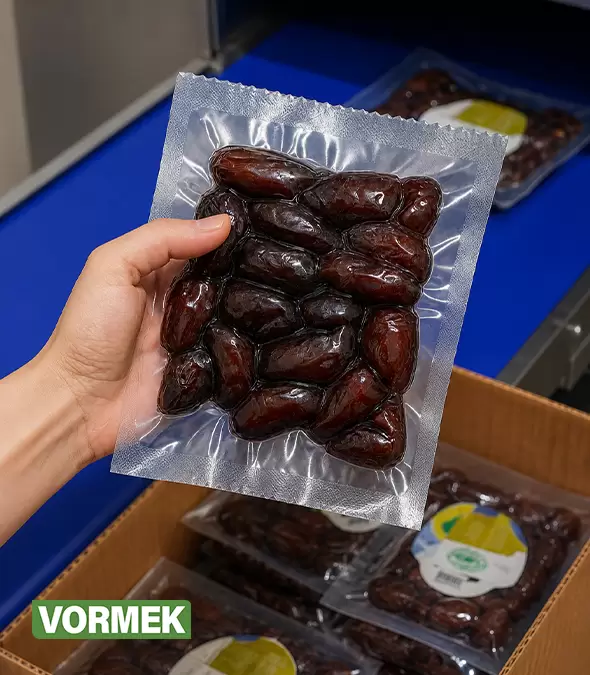
Vacuum packaging operates by removing atmospheric air from the package before sealing, creating a low-oxygen environment around the product. The process involves placing the product in a packaging material, evacuating the air to create a vacuum, and then sealing the package hermetically.
For dried fruits and dates, the primary preservation mechanisms include:
Oxygen Exclusion: By removing oxygen, vacuum packaging effectively inhibits oxidative rancidity, which is particularly important for nuts and high-fat dried fruits. This process helps maintain the quality and flavour of the product for an extended period.
Insect Control: The removal of oxygen creates an environment that is lethal or inhospitable to common storage pests, reducing the need for chemical fumigation.
Moisture Retention: The sealed environment helps retain moisture at optimal levels, preventing the product from becoming excessively dry or absorbing environmental moisture.
Volume Reduction: Vacuum packaging reduces package volume, which can improve storage density and reduce transportation costs.
Scientific Evidence for Vacuum Packaging Effectiveness
Research has demonstrated the effectiveness of vacuum packaging for dates and dried fruits. A study on Piarom dates found that vacuum packaging maintained pH stability (5.85) compared to unpackaged controls (5.78) and significantly reduced insect infestation rates . The water activity changes in vacuum-packaged samples were almost the same as MAP-packaged samples and significantly different from controls.
Research on Barhi dates has indicated that vacuum packaging combined with cold storage and edible coatings can effectively preserve quality parameters, including fruit weight, hardness, decay percentage, and moisture content . The combination of coating, temperature, and packaging conditions was found to significantly influence Barhi date quality during storage.
Equipment Considerations for Vacuum Packaging
Vacuum Chamber Machines
For smaller-scale dried fruit operations, vacuum chamber machines offer flexibility and consistent performance. These systems place the entire package inside a sealed chamber, evacuate the air, and then seal the package. They are suitable for products requiring gentle handling and are available in various sizes to accommodate different production volumes.
Thermoforming Machines
Thermoforming vacuum packaging systems form the bottom web into cavities, fill with product, apply a top film, and then evacuate the air and seal under vacuum conditions. These systems offer high production speeds suitable for large-scale manufacturing and excellent product presentation through customised cavity shapes.
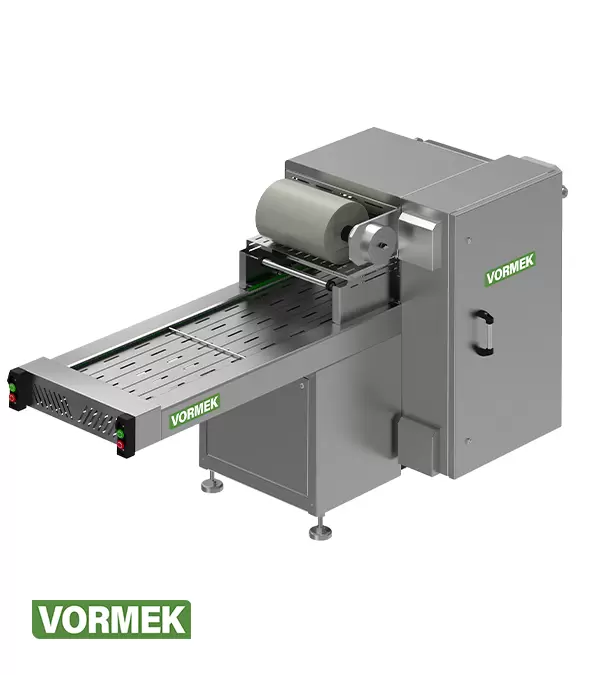
Vormek’s thermoforming machine range provides comprehensive solutions for dried fruit manufacturers requiring high-speed vacuum packaging with precise process control. These systems incorporate advanced sealing technology and hygienic design features essential for food manufacturing environments.
Skin Packaging
Skin packaging a specialised form of vacuum packaging draws a heated film tightly over the product and a porous substrate, creating a “second skin” effect. This approach provides exceptional product presentation while maintaining the protective benefits of vacuum packaging. For irregularly shaped dried fruits, skin packaging offers superior visual appeal and reduced packaging waste.
Packaging Material Requirements
Oxygen Barrier Performance: High barrier films incorporating EVOH or aluminium layers provide the oxygen protection essential for maintaining the low-oxygen environment created during vacuum packaging. Research has demonstrated that the choice of packaging material significantly influences the quality of packaged dried fruits .
Puncture Resistance: The compression forces created during vacuum packaging can stress the packaging film, particularly when packaging products with sharp edges such as date pits or dried fruit stems. Multi-layer films with good puncture resistance are essential.
Moisture Barrier: Dried fruits require packaging materials with excellent water vapour barrier properties to prevent moisture absorption or loss . Studies have shown that metallised films provide significantly better moisture protection than non-metallised alternatives.
Seal Integrity: The film must form hermetic seals that maintain vacuum integrity throughout the product’s shelf life. Contamination on the seal area can compromise seal quality; therefore, packaging films designed to seal through minor contamination are valuable.
Chapter 3: Modified Atmosphere Packaging (MAP) for Dried Fruits and Dates
Technical Principles of MAP
Modified Atmosphere Packaging (MAP) involves replacing the air inside the package with a controlled gas mixture specifically selected to slow the deterioration of the packaged product. Unlike vacuum packaging, which removes air without introducing replacement gases, MAP actively manages the gaseous environment to achieve optimal preservation conditions.
For dried fruits and dates, the gases commonly used in MAP include:
Nitrogen (N₂): An inert gas that displaces oxygen without interacting with the product. Nitrogen prevents oxidation and acts as a filler gas to maintain package structure and prevent collapse. In dried fruit applications, nitrogen provides a protective atmosphere that preserves product quality during long-term storage and distribution .
Carbon Dioxide (CO₂): Possesses antimicrobial properties that inhibit bacterial and mould growth. For dried fruits and dates, research has shown that CO₂ can have beneficial effects on keeping overall quality and safety. Studies on Deglet Nour dates found that CO₂ showed the most beneficial effect on maintaining quality, with packages under 60 kPa CO₂ demonstrating the best preservation .
Oxygen (O₂): For most dried fruits, oxygen is excluded to prevent oxidation. However, in some applications, trace amounts of oxygen may be maintained to preserve product colour. Research on Barhi dates has shown that MAP with specific oxygen and CO₂ concentrations can effectively improve physicochemical, textural, and organoleptic properties .
Scientific Evidence for MAP Effectiveness
Research has consistently demonstrated the benefits of MAP for dried fruits and dates. A study on Barhi dates found that MAP with (5% O₂ + 20% CO₂) at 5°C improved all physicochemical, textural, and organoleptic properties, achieving the lowest weight loss and best firmness retention .
Research on Deglet Nour dates demonstrated that MAP techniques are able to lead to better quality after a commonly used transportation and distribution period. CO₂ was found to be the gas that showed the most beneficial effect on keeping overall quality and safety of dates, mainly at 60 kPa under active MAP. This method could be considered technically and economically feasible .
A study on Iranian Mazafati dates found that MAP with high concentrations of carbon dioxide, combined with low-temperature storage, significantly extended shelf life. Acidity, Brix index, and microbial loads in the MAP treatment groups were significantly lower than control groups, and the MAP group at 5°C had the highest sensorial scores .
MAP Gas Management Methods
Gas Flushing
Gas flushing involves injecting the desired gas mixture into the package while allowing the existing air to be displaced. This method is commonly used for dried fruits where rapid atmosphere modification is desired. The effectiveness of gas flushing depends on gas flow rate, package geometry, product density, and sealing timing.
Gas Exchange (Vacuum-Assisted)
The gas exchange method first applies a vacuum to remove the air from the package, then introduces the desired gas mixture. This approach achieves lower residual oxygen levels than gas flushing alone and is suitable for products requiring very low oxygen concentrations.
Engineering Considerations for MAP Design
Product Characteristics: Each type of dried fruit or date has specific preservation requirements based on its moisture content, fat content, and surface characteristics. Dried fruits have highly reactive surfaces, making them especially vulnerable to moisture and oxygen exposure during storage .
Film Permeability: The packaging film must provide appropriate oxygen and nitrogen transmission rates to maintain the desired gas composition. Co-extruded PA/PE thermoforming films are widely considered the most effective choice for dried fruit packaging, providing strong resistance against both moisture and oxygen .
Package Volume: The headspace volume relative to product weight affects gas concentration stability. Sufficient headspace is necessary to maintain the protective atmosphere.
Temperature Management: Temperature affects both the rate of product deterioration and the effectiveness of the modified atmosphere. Studies have demonstrated that MAP is most effective when combined with appropriate temperature conditions .
Chapter 4: Comparative Analysis of Vacuum and MAP Technologies
When to Choose Vacuum Packaging
Vacuum packaging is typically the preferred choice for:
Products where complete oxygen removal is required
Applications where compression forces are acceptable
Products with high susceptibility to oxidation such as walnuts and hazelnuts
Cost-sensitive applications where simpler equipment and lower operational costs are desired
Research has shown that vacuum packaging effectively preserves pH stability and reduces insect infestation in dates . The moisture barrier properties of vacuum packaging also help maintain optimal water activity levels.
When to Choose MAP
MAP is generally the better option for:
Delicate products susceptible to compression damage
Products requiring specific gas compositions beyond simple oxygen removal
Applications where antimicrobial action from CO₂ is beneficial
Products where visual presentation is important
Products requiring extended shelf life under variable temperature conditions
Research has shown that MAP is particularly effective for dates, with CO₂ demonstrating the most beneficial effect on keeping overall quality and safety . The ability to control the gas composition precisely makes MAP ideal for premium dried fruit products.
Hybrid Approaches: Vacuum-Assisted MAP
Modern packaging machinery often combines vacuum and MAP technologies to achieve optimal preservation results. Thermoforming machines frequently employ a sequence where air is first evacuated from the package cavity, then the desired gas mixture is introduced before sealing. This “vacuum-assisted MAP” approach can achieve very low residual oxygen levels while providing the benefits of a controlled atmosphere.
The CEHUMA CM Series thermoforming machine for dried fruits provides consistent seals and uses both vacuum and MAP methods to maintain product integrity while enabling efficient packing of large quantities . This hybrid approach combines the oxygen removal of vacuum with the atmosphere control of MAP.
Technical Comparison Table
Chapter 5: Packaging Material Selection for Dried Fruits and Dates
Barrier Properties and Film Performance
The selection of appropriate packaging materials is critical for the success of both vacuum and MAP applications. Dried fruits are particularly sensitive to moisture and oxygen, requiring materials with excellent barrier properties.
Research on dried apples has demonstrated the significant influence of packaging materials on product quality . The study compared five types of packaging materials:
Polyethylene (PE)
Oriented polypropylene metallised (OPPmet)
Combination: Oriented polypropylene/polyethylene (OPP/PE)
Combination: Oriented polypropylene metallised/polyethylene (OPPmet/PE)
Combination: Polyester/oriented polypropylene metallised/polyethylene (PET/OPPmet/PE)
The results showed that monomaterials OPP and PE had the poorest protective properties, while the combination of PET/OPPmet/PE showed the best barrier and protective properties for packed dried apples .
Key Findings on Barrier Properties:
Oxygen Permeability: Highest permeability was recorded for monomaterials PE and OPP. The protective characteristics of OPPmet, combination OPP/PE, and monomaterials PET were better. The barrier characteristics of combinations OPPmet/PE and PET/OPPmet/PE were significantly better .
Water Vapour Permeability: The protective properties of monomaterials OPP and PE were the poorest. The protective properties of monomaterials PET and of the combination OPP/PE were slightly better. Good protective characteristics were achieved with OPPmet, OPPmet/PE, and PET/OPPmet/PE, improved by the metallisation of OPP .
Light Transmittance: All monomaterials and OPP/PE showed high transparency in the VIS range. In the UV range, features differed significantly. Metallised materials showed significantly lower permeability of light, providing protection against UV-induced degradation .
Recommended Film Types for Dried Fruits
Based on research findings, the following film types are recommended:
Co-extruded PA/PE Thermoforming Films: These high-barrier films provide strong resistance against both moisture and oxygen, which are the main causes of product deterioration. They are widely considered the most effective choice for dried fruit packaging .
Metallised Films: Metallisation significantly improves both oxygen and water vapour barrier properties. Films such as OPPmet/PE and PET/OPPmet/PE provide excellent protection for dried fruits .
Aluminium Foil Laminates: For the highest level of protection, aluminium foil laminates provide near-complete barrier to oxygen, moisture, and light.
Sustainability Considerations
As sustainability becomes increasingly important, packaging engineers must consider recyclable and mono-material options that meet performance requirements while supporting circular economy objectives. Recent innovations include:
Paperboard trays with barrier liners that use 80-90% less plastic while maintaining performance
Mono-material PE films with high barrier coatings
Recyclable PET and PP films
Chapter 6: Equipment Selection for Dried Fruits and Dates Packaging
Tray Sealers
Tray sealers are suitable for products packaged in pre-formed trays and offer:
Precise control of gas mixture composition
Consistent residual oxygen levels
High production throughput
Quick changeover between different tray formats
For dried fruits and dates, tray sealers can accommodate various tray materials including PET, PP, and biodegradable options. Vormek’s tray sealing solutions integrate advanced gas control technology with robust industrial engineering, delivering consistent results in demanding production environments.
Thermoforming Machines
Thermoforming machines form the bottom web into cavities, fill with product, apply a top film, evacuate the air, introduce the desired gas mixture, and then seal. These systems provide:
Complete integration of forming, filling, and gas management
Excellent gas barrier properties through formed packaging
High production efficiency for large-scale operations
Flexibility for various product shapes and sizes
Modern thermoforming machines for dried fruits provide consistent seals and use both vacuum and MAP methods to maintain product integrity . They can handle a full spectrum of products including dried apricots, figs, dates, plums, apple slices, mulberries, hazelnuts, walnuts, and mixed nut blends.
Equipment Features for Dried Fruit Applications
Stainless Steel Construction: Equipment should be built with total stainless steel construction to comply with strict global food safety regulations and HACCP requirements. Corrosion-resistant materials are essential for maintaining hygiene standards .
Modular Design: Modular construction allows easy customisation for various product sizes, weights, and packaging styles, from small retail portions to large-scale bulk export packs. This flexibility reduces downtime and improves overall efficiency .
Precise Gas Control: Advanced gas dosing technology ensures accurate nitrogen levels in every package, protecting against oxidation, humidity damage, and spoilage .
Corrosion-Resistant Gripper Chain: Designed to handle different product textures, from fragile mulberries and apricots to heavier walnut and mixed nut blends, ensuring seamless film movement .
Production Efficiency Considerations
Throughput Requirements: Match equipment capacity to production requirements. High-speed machines can operate at 5–12 cycles per minute with consistent performance, even in highly intensive processing environments .
Changeover Time: Quick changeover between different package formats reduces downtime and increases overall efficiency. Modular design enables rapid adjustments for different product sizes and packaging styles.
Preventive Maintenance: A comprehensive preventive maintenance program is essential for operational reliability. This includes scheduled inspection and lubrication, replacement of wear components, and calibration of sensors and control systems.
Chapter 7: Common Packaging Challenges and Solutions
Challenge 1: Moisture Absorption
Symptoms:
Product stickiness and clumping
Sugar crystallisation
Accelerated microbial growth
Root Causes:
Inadequate moisture barrier film
Poor seal integrity
Storage in high-humidity conditions
Solutions:
Use high moisture barrier films such as PET/OPPmet/PE combinations
Ensure hermetic seals
Maintain appropriate storage relative humidity (70–75% for fresh dates)
Challenge 2: Oxidation and Rancidity
Symptoms:
Off-flavours and odours
Discolouration
Reduced nutritional quality
Root Causes:
Inadequate oxygen barrier
Residual oxygen in the package
Exposure to light
Solutions:
Use high oxygen barrier films with EVOH or aluminium layers
Implement vacuum or nitrogen MAP to remove oxygen
Use light-blocking materials such as metallised films
Challenge 3: Insect Infestation
Symptoms:
Visible insects in or on the product
Webbing or frass
Product damage
Root Causes:
Inadequate package sealing
Recontamination after fumigation
Inappropriate storage conditions
Solutions:
Use vacuum or MAP to create an environment that reduces pest infestation rates
Maintain seal integrity to prevent insect entry
Implement integrated pest management programs
Challenge 4: Seal Integrity Issues
Symptoms:
Leaking packages
Loss of protective atmosphere
Premature product deterioration
Root Causes:
Contamination on seal area
Inconsistent sealing temperature or pressure
Inappropriate film selection
Solutions:
Implement regular seal quality testing
Maintain sealing equipment properly
Select films designed for seal-through-contamination
Challenge 5: Quality Changes During Storage
Symptoms:
Colour changes
Flavour deterioration
Texture changes
Root Causes:
Inappropriate atmosphere composition
Temperature fluctuations
Extended storage duration
Solutions:
Research optimal packaging conditions for the specific product
Maintain consistent cold chain conditions
Use appropriate gas mixtures as demonstrated in research
Chapter 8: Emerging Trends in Dried Fruits and Dates Packaging
Sustainable Packaging Solutions
Consumer demand for sustainable packaging is driving innovation in materials and equipment for dried fruits. Key developments include:
Paperboard Alternatives: Paperboard trays with barrier liners that use 80-90% less plastic while maintaining MAP performance and seal integrity are becoming more widely available.
Recyclable and Mono-Material Films: Multi-layer films that maintain barrier performance while being recyclable through existing waste streams are increasingly available.
Biodegradable Films: Research on biodegradable materials continues to advance, with potential applications for dried fruit packaging.
Reduced Packaging: Optimising material usage without compromising protection reduces waste and supports sustainability goals.
Smart Packaging Integration
The integration of smart packaging features is increasing in the dried fruit sector:
Freshness Indicators: Sensors that indicate product freshness to consumers
Temperature Monitoring: Systems that track temperature exposure during distribution
RFID Tags: Radio frequency identification for improved traceability throughout the supply chain
QR Codes: Digital links to product information and traceability data
Automation and Industry 4.0
Packaging equipment is becoming more integrated with digital manufacturing systems:
Predictive Maintenance: Systems that predict maintenance needs before failure occurs
Real-Time Process Monitoring: Sensors that provide immediate feedback on packaging quality
Integrated Quality Control: Automated inspection systems that reject defective packages
Data Analytics: Systems that collect and analyse production data for continuous improvement
Response to Consumer Demand for Convenience
Consumer preferences for convenient packaging formats are driving innovation:
Resealable Packaging: Features that allow consumers to reseal packages after opening
Smaller Portion Sizes: Increased demand for single-serve and convenience formats
Premium Packaging: Enhanced visual presentation for value-added products
Vormek’s packaging solutions are designed with the flexibility to accommodate these evolving market requirements, with modular systems that adapt to different pack sizes, tray formats, and packaging methods.
Technical Comparison Table: Equipment Capabilities for Dried Fruits
Frequently Asked Questions
1. Can vacuum packaging be used for all types of dried fruits?
Vacuum packaging is not suitable for all dried fruits. Delicate products such as whole figs and soft dates may be damaged by compression forces. MAP is typically recommended for fragile products where preservation without physical compression is required.
2. How does MAP prevent insect infestation in dried fruits?
MAP reduces insect infestation by creating a low-oxygen environment that is lethal to common storage pests. Research has shown that passive MAP and vacuum packaging significantly reduce pest infestation rates compared to unpackaged controls .
3. What is the difference between vacuum and MAP packaging for dried fruits?
Vacuum packaging removes air from the pack, limiting oxidation and slowing moisture interaction. MAP packaging goes further by replacing air with nitrogen, creating a more stable internal atmosphere that provides additional protection against moisture and oxidation .
4. Do I need different packaging films for vacuum vs. MAP?
Both technologies require high-barrier films with good sealability, but MAP applications require more specific gas permeability characteristics. Co-extruded PA/PE thermoforming films are widely considered the most effective choice for both applications .
5. How does the type of dried fruit affect packaging method selection?
High-fat products such as walnuts and hazelnuts benefit from vacuum packaging for complete oxygen removal. Delicate products such as whole dried figs may be better served by MAP to avoid compression damage. Dates at different maturity stages (Khalal, Rutab, Tamar) have specific packaging requirements .
6. Can packaging equipment be designed to switch between vacuum and MAP modes?
Modern thermoforming and tray sealing equipment often offers the flexibility to operate in either vacuum or MAP mode, allowing manufacturers to adapt to different product requirements. Vormek’s equipment is designed with modular systems that enable switching between packaging modes with minimal changeover time.
7. How does temperature affect the effectiveness of MAP for dried fruits?
Temperature affects both product stability and the effectiveness of the modified atmosphere. Research has shown that MAP is most effective when combined with appropriate temperature conditions. For dates, storage at 5°C with MAP significantly improves quality compared to ambient temperature storage .
8. What film types are best for dried fruit packaging?
Co-extruded PA/PE thermoforming films are widely considered the most effective choice, providing strong resistance against both moisture and oxygen . Metallised films such as OPPmet/PE and PET/OPPmet/PE provide excellent barrier properties . For dates, high moisture barrier materials are essential to prevent moisture loss or absorption .
9. What monitoring systems are important for packaging quality assurance?
Integrated monitoring systems are essential for maintaining packaging quality. These systems can detect deviations from optimal operating conditions, such as temperature variations, pressure changes, or gas concentration fluctuations, and alert operators to potential issues before they compromise product safety or quality.
10. Are there sustainable alternatives to traditional plastic packaging for dried fruits?
Yes. Paperboard trays with barrier liners that use 80-90% less plastic while maintaining MAP performance are now available. Recyclable and mono-material films are also being developed. Vormek’s packaging equipment is compatible with a wide range of sustainable film options, enabling manufacturers to transition to more sustainable packaging without compromising performance.
Chapter 9: Implementation Strategy for Packaging Technology Upgrades
Assessing Your Current Situation
Before investing in new packaging equipment, conduct a thorough assessment of your current operations:
Product Analysis
What are your products’ specific preservation requirements?
What moisture content and water activity levels are optimal?
Are there current quality issues that packaging could address?
What is the maturity stage of your dates (Khalal, Rutab, Tamar)?
Production Analysis
What are your current production volumes and growth projections?
How much changeover flexibility is required?
What are your labour and operational constraints?
Financial Analysis
What is your budget for capital investment?
What is the expected return on investment from improved shelf life?
What operational savings could be achieved?
Developing the Business Case
A compelling business case for packaging technology investment should include:
Quality Benefits
Extended product shelf life
Reduced product waste and returns
Enhanced brand reputation
Operational Benefits
Increased production efficiency
Reduced downtime
Simplified changeover processes
Financial Benefits
Reduced packaging material costs
Lower transportation costs
Increased production capacity
Equipment Selection Criteria
When selecting packaging equipment for dried fruits and dates, consider:
Performance Requirements
Target throughput rates
Required packaging flexibility
Quality standards and monitoring requirements
Integration Requirements
Compatibility with existing production lines
Integration with upstream and downstream equipment
Control system integration
Support Requirements
Availability of technical support
Training requirements
Availability of spare parts
Implementation Planning
Successful implementation requires careful planning:
Pre-Installation Preparation
Site preparation and utility requirements
Operator training preparation
Production scheduling to minimise disruption
Installation and Commissioning
Equipment installation
Integration with existing systems
Testing and validation
Optimisation and Continuous Improvement
Performance monitoring and optimisation
Operator skill development
Continuous improvement processes
Vormek provides comprehensive implementation support, from initial assessment through installation and optimisation, ensuring successful adoption of new packaging technology.
Conclusion
The choice between vacuum packaging and Modified Atmosphere Packaging for dried fruits and dates requires careful consideration of product characteristics, production requirements, and quality objectives. Vacuum packaging excels in applications where complete oxygen removal is paramount and product integrity is not compromised by compression forces. MAP offers superior protection for delicate products and provides antimicrobial benefits through controlled CO₂ inclusion where appropriate.
Research has demonstrated the effectiveness of both technologies, with MAP showing particular promise for dates. Studies have shown that CO₂ has the most beneficial effect on keeping overall quality and safety of dates, and that MAP combined with low-temperature storage can significantly extend shelf life . Vacuum packaging has been shown to effectively reduce pest infestation rates and maintain pH stability in dates .
The selection of appropriate packaging films is critical for both technologies. Research on dried apples has demonstrated that the combination of PET/OPPmet/PE packaging materials showed the best barrier and protective properties . For dates and dried fruits generally, high moisture barrier materials are essential to protect against moisture loss or gain, which directly affects quality and shelf life .
Both technologies require precision-engineered machinery capable of achieving consistent vacuum levels, accurate gas mixtures, and hermetic seals. The success of either approach depends critically on the selection of appropriate packaging films, proper equipment maintenance, and rigorous quality monitoring.
As consumer expectations for convenience, quality, and sustainability continue to rise, the role of advanced packaging technologies in dried fruit preservation will only grow in importance. Investing in the right equipment and expertise to implement these technologies effectively is a strategic imperative for dried fruit manufacturers committed to excellence.
The packaging landscape is evolving rapidly, with sustainability requirements, digital integration, and consumer preferences driving innovation. Manufacturers who partner with experienced packaging equipment suppliers like Vormek can navigate these changes effectively, ensuring their packaging operations remain competitive and capable of meeting evolving market requirements.
Ready to transform your dried fruits or dates packaging operation? Vormek’s packaging engineering team offers comprehensive solutions for vacuum and MAP packaging requirements specific to the dried fruit industry. From initial product assessment through equipment selection, installation, and ongoing support, our experts ensure your packaging line delivers consistent quality and optimal shelf life performance.
Contact Vormek Packaging Solutions today to schedule your complimentary packaging line assessment. Our engineers will analyse your specific product requirements, evaluate your current packaging operation, and recommend the optimal equipment configuration to achieve your quality and production goals.
Visit our website to explore our full range of tray sealers, thermoforming machines, and packaging automation solutions designed specifically for the dried fruits and dates industry.