مقدمة
تعمل صناعة تجهيز المأكولات البحرية في بيئة صعبة بشكل فريد. فالأسماك الطازجة، والمحاريات، ومنتجات المأكولات البحرية ذات القيمة المضافة تطرح تحديات في التغليف لا يمكن لأي فئة غذائية أخرى مضاهاتها: محتوى رطوبة عالٍ، وقوام دقيق، ونشاط إنزيمي سريع، وحساسية شديدة لدرجة الحرارة والتعرض للأكسجين. تتضافر هذه العوامل لتخلق ما يمكن القول بأنه تطبيق التغليف الأكثر تحدياً من الناحية التقنية في قطاع تصنيع الأغذية.
إن تغليف المأكولات البحرية هو في الأساس عملية حفظ، لكن هذا الهدف يشمل أكثر بكثير من مجرد إطالة عمر المنتج. يجب أن تعالج عملية تغليف المأكولات البحرية المصممة جيداً في وقت واحد سلامة المنتج، وعرضه على المستهلك، والامتثال التنظيمي، والكفاءة التشغيلية، واستقرار سلسلة التوريد. تمتد عواقب فشل التغليف في المأكولات البحرية سواء من خلال التسرب أو الأكسدة أو التلوث أو الانهيار الهيكلي إلى ما هو أبعد من فقدان المنتج لتشمل تلف العلامة التجارية، وعدم رضا العملاء، وتأثيراً اقتصادياً كبيراً.
يواجه معالجو المأكولات البحرية الحديثون تعقيداً تشغيلياً متزايداً مع إدارتهم لتنوع المنتجات المتزايد، ومبادرات الاستدامة، وتحديات العمالة. فكل تغيير في وحدة SKU سواء كان التحول من الشرائح إلى المحاريات، أو تعديل أحجام الحصص، أو تبديل المواد يؤدي إلى توقف، وأخطاء محتملة، وعدم كفاءة في العمليات. يتطلب تحقيق المرونة الحقيقية في تغليف المأكولات البحرية نهجاً على مستوى الأنظمة ينسق عمليات التبديل، ويقلل التعديلات اليدوية، ويحسن الاتساق عبر تنسيقات متعددة.
تفحص هذه المقالة المبادئ الهندسية، والخيارات التكنولوجية، والاعتبارات العملية التي تحدد تغليف المأكولات البحرية الفعال. بالاعتماد على أفضل الممارسات الصناعية والخبرة التقنية لشركة Vormek Packaging Solutions، نستكشف كيف تعالج آلات التغليف الحديثة التحديات المحددة لتجهيز الأسماك والمحاريات مع تحقيق تحسينات قابلة للقياس في كفاءة الإنتاج وجودة التغليف.
سواء كنت معالجاً للمأكولات البحرية تسعى لترقية خط تغليف موجود أو تقيم خيارات الأتمتة لمنشأة جديدة، فإن فهم أساسيات هندسة تغليف المأكولات البحرية أمر ضروري لاتخاذ قرارات استثمارية مستنيرة. يوفر هذا الدليل الأساس التقني الذي تحتاجه.
التحديات الفريدة لتغليف المأكولات البحرية
خصائص المنتج التي تحدد متطلبات التغليف
تختلف المأكولات البحرية اختلافاً جوهرياً عن منتجات البروتين الأخرى. تمتلك الأسماك والمحاريات مزيجاً من الخصائص التي تجعل تصميم التغليف معقداً بشكل خاص.
محتوى رطوبة عالٍ وسائل حر. تحتوي المأكولات البحرية الطازجة بشكل طبيعي على كمية كبيرة من الماء – حيث يتكون نسيج عضلات السمك عادة من 65-80٪ ماء. أثناء التخزين والمناولة، يمكن لهذه الرطوبة أن تهاجر من المنتج، مما يخلق سوائل حرة (تنقيط) داخل العبوة. يعزز هذا السائل النمو الميكروبي، ويحلل مظهر المنتج، ويخلق مخاطر تسرب تهدد سلامة التغليف طوال سلسلة التوريد. يعد وجود السائل الحر أحد العوامل الأكثر أهمية التي تميز تغليف المأكولات البحرية عن تطبيقات اللحوم أو الدواجن، حيث تقلل الرطوبة الجوهرية المنخفضة من خطر هجرة السوائل.
قوام دقيق وضعف في الشكل. تزيد الطبيعة الهشة لشرائح الأسماك والروبيان والمحاريات من خطر تشوه المنتج أثناء التغليف والنقل. على عكس اللحوم الحمراء، التي تتمتع بسلامة هيكلية أكبر، تتطلب المأكولات البحرية حلول تغليف توفر الحماية دون ضرر الضغط. هذا يمثل تحدياً خاصاً للمنتجات ذات القيمة المضافة مثل الشرائح المحتفظة بالجلد أو أجزاء التجميد الفردي السريع (IQF) التي يجب أن تحافظ على شكلها ومظهرها.
نشاط إنزيمي وميكروبي سريع. تتلف المأكولات البحرية بشكل أسرع من معظم منتجات البروتين الأخرى بسبب التركيزات العالية من الأحماض الأمينية الحرة والأحماض الدهنية غير المشبعة. يخلق مزيج الإنزيمات الذاتية والبكتيريا المحبة للبرودة – الكائنات الحية الدقيقة القادرة على النمو في درجات حرارة التبريد – تحديات في التلف يجب معالجتها من خلال التحكم الدقيق في بيئة التغليف. أظهرت الأبحاث أن تنوع كائنات التلف في المأكولات البحرية ينخفض بشكل كبير في ظل ظروف الغلاف الجوي المحكوم، مما يدعم مباشرة أهداف الحفظ.
حساسية عالية للظروف البيئية. المأكولات البحرية حساسة بشكل خاص للتعرض للأكسجين (الذي يدفع أكسدة الدهون وتغيرات اللون)، وتقلبات درجات الحرارة، والإجهاد الفيزيائي. يعد الحفاظ على تحكم دقيق في الغلاف الجوي طوال عملية التغليف أمراً ضرورياً. تظهر الدراسات أن ما يصل إلى 10٪ من هدر الطعام يحدث أثناء النقل، وعندما تكون شاحنات التبريد دون المستوى، تفسد الأسماك بسرعة. برزت تكنولوجيا مراقبة درجة الحرارة المرتبطة بأنظمة التعلم الآلي كحل لتتبع النضارة والحفاظ على الجودة طوال سلسلة التبريد.
نقاط الضغط التشغيلية في تجهيز المأكولات البحرية
بالإضافة إلى خصائص المنتج، يواجه معالجو المأكولات البحرية تحديات تشغيلية محددة تؤثر على اختيار معدات التغليف.
متطلبات سلسلة تبريد صارمة. يجب الحفاظ على المأكولات البحرية في درجات حرارة محكومة من الحصاد إلى التوزيع. يجب أن تكون معدات التغليف قادرة على العمل في بيئات باردة وصعبة مع الحفاظ على أداء ثابت. سلسلة التبريد ليست اختيارية في تجهيز المأكولات البحرية – إنها المتطلب الأساسي الذي تعتمد عليه جميع تدابير الجودة الأخرى.
معايير نظافة عالية. تعمل صناعة المأكولات البحرية تحت لوائح سلامة غذائية صارمة تتطلب تصميمات معدات تسهل التنظيف الشامل. إن البناء من الفولاذ المقاوم للصدأ، وقابلية الغسيل، ومبادئ التصميم الصحي ليست اختيارية – بل هي متطلبات أساسية. تؤكد إرشادات EHEDG على أن آلات التغليف للمواد الغذائية الصلبة يجب أن تعالج المنطقة الصحية الأكثر أهمية: منطقة تحميل المنتج المفتوحة حيث يمكن أن يستمر التلوث طوال التغليف. يعتبر التلوث في هذه المرحلة إشكالياً بشكل خاص لأنه يحدث في النقطة النهائية قبل الختم، مما يعني أن أي إعادة تلوث تبقى داخل العبوة.
منع التسرب. تجعل الرطوبة الطبيعية في الأسماك والروبيان والمحاريات التسرب عاملاً حاسماً في تصميم التغليف. حتى الفشل البسيط في العبوة يمكن أن يلوث حاويات الشحن، ويلحق الضرر بالمنتجات المجاورة، ويؤدي إلى رفض العميل في البيع بالتجزئة. إن سلامة الختم المتفوقة ضرورية وتبدأ باختيار مواد التغليف المناسبة. لتغليف أجزاء السلمون على سبيل المثال، تحقق الأنظمة الروبوتية الآن ما يصل إلى 120 قطعة في الدقيقة بدقة تقلل من الهدر وتعظم العائد.
توافر العمالة وتكلفتها. اعتمدت العديد من عمليات تجهيز المأكولات البحرية تاريخياً على طرق التغليف اليدوية، لكن نقص العمالة وارتفاع التكاليف يدفعان اعتماد الأتمتة. تقدم المعدات التي يمكنها الحفاظ على الجودة مع تقليل متطلبات العمالة ميزة تنافسية كبيرة. تقلل الأنظمة الآلية من المناولة اليدوية، وتحسن الدقة، وتحافظ على جودة المنتج المتسقة مع التكيف بسرعة مع أنواع التغليف الجديدة أو تنسيقات المنتج.
تقنيات التغليف لتطبيقات المأكولات البحرية
التغليف بالغازات المعدلة (MAP)
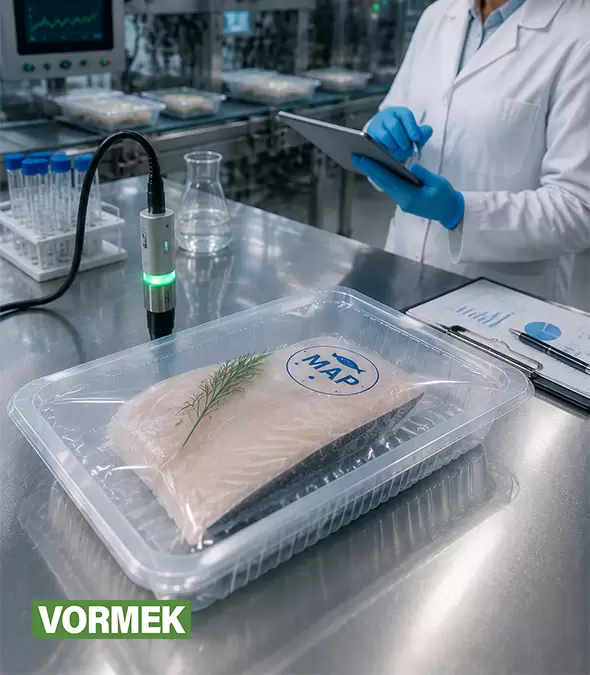
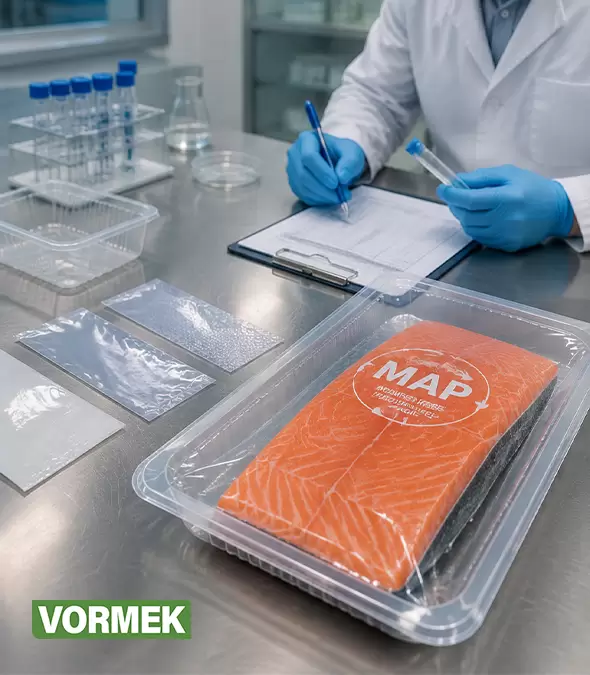
يمثل التغليف بالغازات المعدلة أهم تقدم تكنولوجي في تغليف المأكولات البحرية الطازجة على مدى العقود العديدة الماضية. يستبدل MAP الهواء داخل العبوة بمزيج غاز محكوم مصمم لإبطاء التلف والحفاظ على النضارة.
كيف يعمل MAP في المأكولات البحرية. المبدأ الأساسي لـ MAP هو تقليل تركيز الأكسجين داخل العبوة مما يحد من التفاعلات المؤكسدة ونمو البكتيريا الهوائية مع إدخال غازات تثبط النشاط الميكروبي بشكل فعال. يوفر ثاني أكسيد الكربون (CO₂) تأثيرات مضادة للميكروبات من خلال خلق بيئة حمضية في رطوبة سطح المنتج. يعمل النيتروجين (N₂) كحشو خامل يحل محل الأكسجين ويمنع انهيار العبوة.
أكدت الأبحاث أن الأسماك والمحاريات المخزنة في ظل ظروف الغلاف الجوي المعدل لها أعداد بكتيرية أقل، ومستويات حموضة أعلى، وتكوين ثلاثي ميثيل أمين منخفض، وإنتاج أمونيا أقل. هناك أيضاً تأثير إيجابي متبقي على جودة الحفظ بعد الإزالة من بيئة CO₂ الغنية، مما يمد الفائدة إلى ما بعد العبوة نفسها.
فوائد جودة المأكولات البحرية. يحافظ MAP بشكل فعال على الجاذبية البصرية للمأكولات البحرية الطازجة من خلال الحفاظ على اللون والقوام الطبيعي. تبطئ الأجواء المحكومة أكسدة الدهون، مما يحافظ على ملف الأحماض الدهنية الدقيق الضروري للقيمة الغذائية للمأكولات البحرية وخصائص نكهتها. بالنسبة للمحاريات والقشريات، يساعد MAP في منع تراكم المركبات المتطايرة المرتبطة بالتلف التي تسبب روائح كريهة.
اعتبارات المعدات. يتطلب تنفيذ MAP للمأكولات البحرية آلات تغليف قادرة على شطف الغاز الدقيق والختم الموثوق. يجب أن تحافظ آلات ختم الصواني وآلات التشكيل الحراري المجهزة لـ MAP على معدلات استبدال غاز ثابتة لتحقيق الغلاف الجوي المطلوب للعبوة. يجب أن يخلق نظام الختم ختماً محكماً يحافظ على الغلاف الجوي المعدل طوال دورة توزيع المنتج.
التغليف بالتفريغ
يزيل التغليف بالتفريغ الهواء من العبوة قبل الختم، مما يخلق بيئة منخفضة الأكسجين تحد من النمو البكتيري والتفاعلات المؤكسدة. كانت هذه الطريقة ركيزة أساسية لتجهيز المأكولات البحرية لعقود، خاصة للمنتجات المجمدة والثابتة على الرف.
مزايا للمأكولات البحرية. يوفر التغليف بالتفريغ ثباتاً ممتازاً للمنتج للمأكولات البحرية المجمدة، ويمنع حرق التجميد ويحافظ على الجودة أثناء التخزين المطول. يمنع التلامس المحكم للفيلم الحركة داخل العبوة، مما يقلل من التلف الفيزيائي أثناء النقل. بالنسبة لمنتجات المأكولات البحرية المصنعة، يعتبر التغليف بالتفريغ حلاً فعالاً من حيث التكلفة يوفر حماية موثوقة. إنها تقنية قابلة للتطبيق في تجهيز المأكولات البحرية وتم اعتمادها على نطاق واسع للمنتجات الطازجة والمصنعة والمقددة.
القيود. يمكن للتغليف بالتفريغ التقليدي أن يضغط منتجات المأكولات البحرية الدقيقة، مما يؤدي إلى تغيرات في القوام وفقدان الرطوبة. بالنسبة للمأكولات البحرية الطازجة، يمكن أن يؤدي عدم وجود وسادة غازية إلى تشوه المنتج وتراكم التنقيط في العبوة. بالإضافة إلى ذلك، يمكن للبيئة اللاهوائية الناتجة عن التغليف بالتفريغ أن تدعم نمو بعض البكتيريا المسببة للأمراض إذا تعرض التحكم في درجة الحرارة للخطر.
التغليف الجلدي بالتفريغ (VSP)
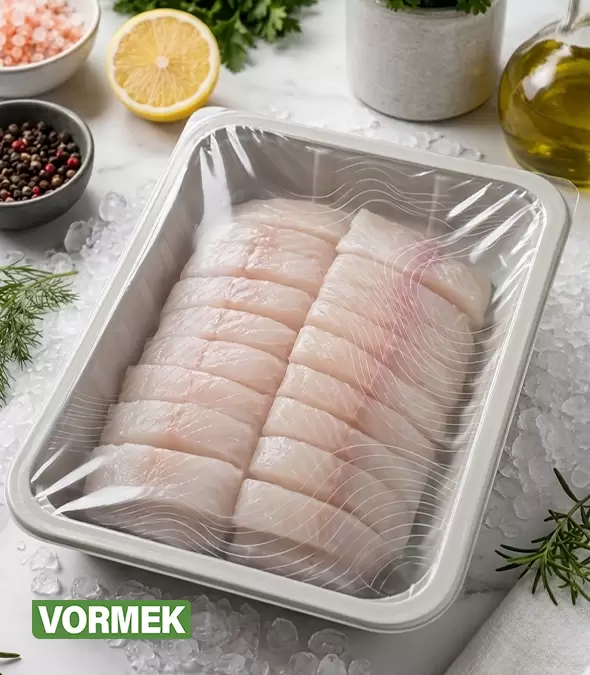
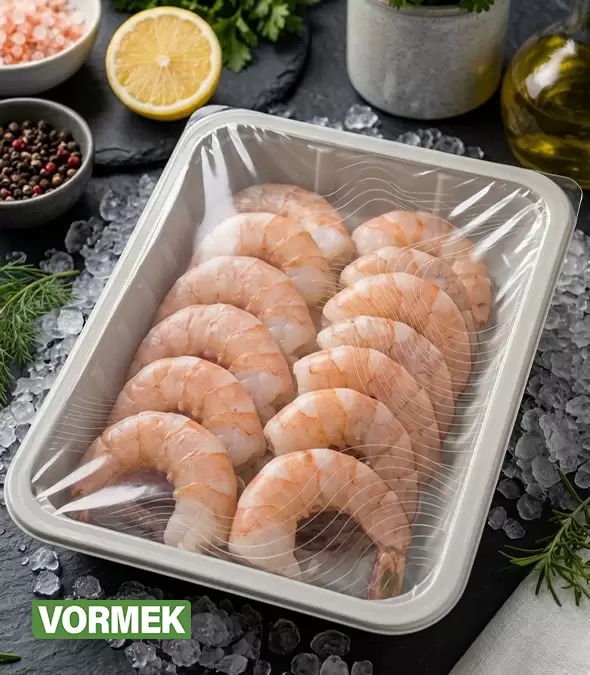
يمثل التغليف الجلدي بالتفريغ تطوراً لتكنولوجيا التفريغ المصممة خصيصاً لمنتجات البروتين الطازجة، بما في ذلك المأكولات البحرية. في VSP، يتم تسخين الفيلم وتشكيله بالتفريغ مباشرة على سطح المنتج، مما يخلق غلافاً شفافاً محكماً يتوافق مع شكل المنتج.
مزايا عرض المنتج. يوفر VSP عرضاً ثلاثي الأبعاد متميزاً يعرض المنتج مع تقليل المساحة الهوائية ومنع الحركة داخل العبوة. يقلل التلامس المحكم للفيلم من هجرة السوائل ويزيل الحاجة إلى وسادات ماصة غير مرتبة. هذا يحسن جاذبية الرف للمنتجات البحرية المتميزة في عروض البيع بالتجزئة.
فوائد الحماية. يعمل الغشاء الجلدي المحكم على تثبيت المنتج أثناء النقل والمناولة، مما يقلل من خطر التلف. يعني عدم وجود مساحة هواء حرة فرصة أقل للأكسدة وتراكم التنقيط. بالنسبة لمعالجي المأكولات البحرية الذين يسعون لتمييز منتجاتهم من خلال العرض المتميز، يقدم VSP مزايا كبيرة.
معدات التشكيل الحراري وختم الصواني
يتم تنفيذ التقنيات الثلاث المذكورة أعلاه – MAP، والتفريغ، والتغليف الجلدي – من خلال فئتين رئيسيتين من المعدات: آلات التشكيل الحراري وآلات ختم الصواني.
آلات التغليف بالتشكيل الحراري. تشكل أنظمة التشكيل الحراري صينية التغليف مباشرة من لفافة فيلم سفلي، مما يخلق تجويفاً مخصصاً يناسب المنتج بدقة. تقوم محطة التشكيل بتسخين الفيلم وسحبه إلى تجويف القالب باستخدام التفريغ أو الضغط. بمجرد التشكيل، يتم ملء الصواني بالمنتج، ثم نقلها إلى محطة الختم حيث يتم تطبيق الفيلم العلوي في ظل ظروف غلاف جوي محكوم.
بالنسبة لمعالجي المأكولات البحرية، يقدم التشكيل الحراري عدة مزايا رئيسية:
- سلامة ختم ممتازة تمنع التسرب عبر قاعدة العبوة
- دمج التشكيل والتفريغ وشطف الغاز والختم والقطع في خط آلي واحد
- تكوينات فيلم مرنة أو صلبة حسب احتياجات حماية المنتج
- نفايات مواد تغليف أقل مقارنة بالصواني مسبقة التشكيل
- ملاءمة لعمليات المعالجة متوسطة إلى كبيرة الحجم
طورت EHEDG إرشادات محددة للتصميم الصحي لآلات التشكيل الحراري، معترفة بأن هذه الأنظمة مطبقة على نطاق واسع، خاصة للمنتجات الغذائية الصلبة والحساسة ميكروبيولوجياً. ينصب التركيز الرئيسي لهذه الإرشادات على منطقة تحميل المنتج المفتوحة، التي تمثل نقطة تحكم حرجة حيث يمكن أن يستمر التلوث طوال عملية التغليف.
آلات ختم الصواني. تم تصميم آلات ختم الصواني لإغلاق الصواني مسبقة التشكيل بغطاء فيلم في ظل ظروف التفريغ أو الغلاف الجوي المعدل. على عكس معدات التشكيل الحراري، تعمل آلات ختم الصواني مع صواني تم تصنيعها بالفعل وتتطلب عملية ختم.
لتطبيقات المأكولات البحرية، تقدم آلات ختم الصواني مرونة عبر تنسيقات المنتج وأحجام الإنتاج. تخدم الأنظمة شبه الآلية المعالجين الصغار وخطوط إنتاج السوبر ماركت، بينما تحقق الوحدات الآلية بالكامل إنتاجية عالية لتجهيز المأكولات البحرية الصناعي. يمكن لآلات ختم الصواني التعامل مع مجموعة واسعة من مواد الصواني، بما في ذلك البلاستيك والكرتون والخيارات القائمة على السليلوز.
مقارنة المعدات. يعتمد الاختيار بين التشكيل الحراري وختم الصواني على متطلبات الإنتاج، ومزيج المنتج، واعتبارات المواد. يقدم التشكيل الحراري كفاءة مادية أكبر وتكاملاً للخطوط عالية الحجم، بينما يوفر ختم الصواني مرونة للعمليات ذات تنسيقات منتجات متعددة وأحجام أقل.
الاتجاه نحو التكامل على مستوى الأنظمة يعني أن خطوط تغليف المأكولات البحرية الحديثة تتبنى بشكل متزايد ضوابط موحدة، ووصفات متزامنة، ورؤية أداء خط متكاملة. يسمح هذا النهج لاختيار وصفة واحدة بضبط أهداف الوزن، وملفات الختم، وتغذية الفيلم، وبيانات الملصق تلقائياً عبر الخط بأكمله، مما يقلل بشكل كبير من أوقات التبديل وتدخل المشغل.
التميز الهندسي في آلات تغليف المأكولات البحرية
مبادئ التصميم الصحي
تتطلب بيئة تجهيز المأكولات البحرية معدات مصممة للتعقيم. يجب أن تسهل آلات التغليف التنظيف الشامل دون خطر دخول الماء الذي قد يتلف المكونات أو يخلق ظروفاً للتلوث البكتيري.
بناء الفولاذ المقاوم للصدأ. يعتبر الفولاذ المقاوم للصدأ 304 المادة القياسية لأسطح التلامس مع الطعام وهياكل الآلات في معدات تغليف المأكولات البحرية. مقاومته للتآكل وقابليته للتنظيف ضروريان للحفاظ على معايير النظافة. كما تقاوم أسطح الفولاذ المقاوم للصدأ التعرض للمواد الكيميائية والرطوبة التي من شأنها أن تحلل المواد الأخرى.
تصميم قابل للغسيل. يعكس الاتجاه الصناعي نحو الآلات المتوافقة مع الغسيل الحاجة إلى تعقيم فعال. تشتمل المعدات المصممة للغسيل على حاويات كهربائية محكمة الغلق، ومحامل محمية، وأسطح تطرد الماء تتحمل التنظيف المباشر. تقلل هذه القدرة بشكل كبير من وقت التنظيف وتضمن نظافة متسقة. تلبي التصاميم الصحية أو تتجاوز معايير IP67 و NEMA4X، مع مواد وبناء مصممين خصيصاً للبيئات الصحية.
اختيار المواد الصحية. يجب أن تكون جميع المكونات التي تتلامس مع المنتج أو مواد التغليف صالحة للطعام ومقاومة للتدهور في ظل ظروف التشغيل. يتم اختيار أنظمة الختم، ومعدات النقل، ومكونات توصيل الغاز لكل من الأداء والامتثال لسلامة الأغذية.
يسهل نظام التصنيف الصحي لـ EHEDG التواصل الواضح بين منتجي الأغذية وموردي المعدات، مما يسمح للمنتجين بمطابقة احتياجاتهم الصحية مع الفئة المناسبة وتوصيل تلك التوقعات بوضوح. يضمن هذا النهج المنهجي أن تلبي معدات التغليف متطلبات النظافة المحددة لتجهيز المأكولات البحرية.
تكنولوجيا الختم وضمان الجودة
الختم هو سمة الجودة الأكثر أهمية لأي عبوة مأكولات بحرية. يؤدي فشل الختم إلى التسرب، وفقدان الغلاف الجوي، وفي النهاية تلف المنتج.
المعلمات المؤثرة على جودة الختم. تعتمد جودة الختم المحكم على عوامل متعددة: درجة حرارة الختم، والضغط، والزمن، والمزيج المحدد لمواد الفيلم. توفر المعدات الحديثة تحكماً دقيقاً في هذه المعايير، مع إعدادات قابلة للبرمجة لأنواع الفيلم المختلفة ومتطلبات المنتج. تتطلب جودة الختم المتسقة تشغيلاً مستقراً للماكينة ومعايرة منتظمة.
أنظمة منع التسرب. تتضمن آلات التغليف المتقدمة ميزات مصممة لتقليل خطر التسرب:
- أشرطة ختم مع ختم نبضي متحكم في درجة الحرارة لتوصيل طاقة ثابت
- أنظمة تبريد تثبت الأختام بسرعة لمنع التشوه
- تصاميم حافة الختم التي تستوعب الاختلافات في أبعاد حافة الصينية
- مراقبة في الوقت الفعلي لمعايير الختم
التحقق من الجودة. أصبحت فحوصات الجودة المدمجة في الخط مهمة بشكل متزايد في عمليات تغليف المأكولات البحرية. تتحقق أنظمة الفحص من أن الأختام سليمة، ومستويات الغلاف الجوي ضمن المواصفات، وأن العبوات تلبي معايير الجودة البصرية.
الأتمتة وتحسين الإنتاج
تقليل المناولة اليدوية. تقلل الأتمتة من المناولة المباشرة لمنتجات المأكولات البحرية، مما يقلل من خطر التلوث ويحسن سلامة الأغذية. تساهم أنظمة التغذية الآلية، والوزن والتجزئة المتكاملان، والتحميل التلقائي للصواني جميعها في بيئة إنتاج أكثر صحية.
تعمل الحلول الروبوتية على تحويل عمليات تغليف المأكولات البحرية. تحقق أنظمة مثل RoboPacker ما يصل إلى 120 قطعة في الدقيقة، باستخدام أنظمة رؤية ثلاثية الأبعاد لضمان وضع دقيق لكل قطعة والسماح بتغليف الوزن المستهدف الأدنى لتعظيم العائد. تعتمد هذه الأنظمة على عقود من التراث الآلي ويقدر أنها تتعامل مع ملايين القطع من البروتين سنوياً، مما يوفر للمعالجين الملايين في الكفاءة التشغيلية.
اتساق الإنتاج. تقدم خطوط التغليف الآلية جودة متسقة يصعب تحقيقها مع العمليات اليدوية. تتلقى كل عبوة نفس المعاملة – نفس تركيبة الغاز، نفس معايير الختم، نفس مستوى الجودة. يقلل هذا الاتساق من الهدر ويحسن رضا العملاء.
كما يتم تطوير أنظمة روبوتية موجهة بالرؤية للتصنيف الآلي لجودة الأسماك وتغليفها، وتصنيف المنتجات حسب الحجم وتحديد مواقعها على أحزمة الناقل للالتقاط والوضع الروبوتي. حققت الأنظمة التجريبية دقة تصنيف تزيد عن 87٪ ومعدلات تغليف روبوتي 87٪، مما يدل على إمكانات هذه التقنيات للفحص الآلي لجودة الأغذية ومناولتها.
الكفاءة التشغيلية. تم تصميم معدات تغليف المأكولات البحرية الحديثة لأداء عالٍ مع الحد الأدنى من التوقف. تقلل أنظمة التغيير السريع لبكرات الفيلم والقوالب من وقت التبديل. تعمل الضوابط التي تعمل بالسيرفو على تحسين الدقة والموثوقية. يتيح اتصال إنترنت الأشياء (IoT) المراقبة عن بعد واستكشاف الأخطاء وإصلاحها، مما يقلل من وقت الصيانة.
تكامل الخط. يتم دمج معدات تغليف المأكولات البحرية بشكل متزايد في خطوط إنتاج كاملة تشمل الوزن التدقيقي، ووضع الملصقات، والتغليف الثانوي. يحسن التكامل الشامل الإنتاجية، ويقلل من مناولة المنتج، ويعزز إمكانية التتبع. ينظر نهج حل الأنظمة إلى خط التغليف كنظام مترابط بدلاً من مجموعة من الآلات، مما يمكن المعالجين من تنسيق عمليات التبديل وتحسين الاتساق عبر وحدات SKU المتعددة.
اختيار المواد وسلامة التغليف
الأفلام عالية الحاجز وخصائص المواد
يعد اختيار مواد التغليف المناسبة أمراً أساسياً لأداء تغليف المأكولات البحرية. تؤثر خصائص حاجز الأكسجين لكل من مواد الغطاء والقاعدة بشكل مباشر على جودة المنتج والعمر الافتراضي.
معدل انتقال الأكسجين. لتغليف المأكولات البحرية، يجب التحكم بعناية في نفاذية الأكسجين لمواد التغليف. تصف الأدبيات البراءات أفلام الراتنج لتغليف المأكولات البحرية مع نفاذية أكسجين تبلغ 100 سم مكعب/(م²·يوم·ضغط جوي) أو أقل في ظل الظروف القياسية، مع مواد قاعدة مقدرة بـ 300 سم مكعب/(م²·يوم·ضغط جوي) أو أقل. تضمن هذه المواصفات أن تحافظ العبوة على غلافها الجوي الواقي طوال دورة توزيع المنتج.
الخصائص الميكانيكية. قوة الشد لمواد التغليف في درجات حرارة التشكيل حرجة للتشكيل الحراري الموثوق. تظهر أفلام الراتنج المصممة لتغليف المأكولات البحرية عادة قوة شد تتراوح من 0.3 إلى 4 نيوتن/مم² عند 140 درجة مئوية، مع معامل مرونة ديناميكي يتراوح من 1×10⁴ إلى 1×10⁷ باسكال، مما يضمن أداء تشكيل ثابت.
بناء الفيلم متعدد الطبقات. يستخدم تغليف المأكولات البحرية المتقدم أفلاماً متعددة الطبقات تتكون من طبقات خارجية، وطبقات وظيفية، وطبقات حاجز للأكسجين، وطبقات مادة مانعة للتسرب. تخدم كل طبقة غرضاً محدداً:
- الطبقات الخارجية (عادةً القائمة على البولي إيثيلين) توفر المتانة وقابلية الطباعة
- الطبقات الوظيفية (التي تحتوي غالباً على راتنجات أيونومر) تعزز الأداء
- طبقات حاجز الأكسجين تمنع تبادل الغازات
- طبقات المادة المانعة للتسرب (القائمة على البولي إيثيلين) تضمن ختماً حرارياً موثوقاً
ابتكارات التغليف الناشئة
أنظمة التغليف الذكية. يتقدم البحث في التغليف الذكي للمأكولات البحرية بسرعة. تم تطوير أغشية مركبة حيوية غنية بالبيتالين تتغير لونها تحت ظروف pH مختلفة، لتكون بمثابة مؤشرات للنضارة والتلف للأسماك والروبيان ومنتجات اللحوم. توفر هذه الأصباغ الطبيعية، المستخرجة من القطيفة أو البنجر أو فاكهة التنين، أدوات قياس لونية غير سامة تشير إلى ما إذا كان الطعام لا يزال صالحاً للأكل.
الأغشية الصالحة للأكل والقابلة للتحلل. تدفع المخاوف البيئية تطوير بدائل قابلة للتحلل من مواد خام طبيعية متجددة. تجمع أغشية التغليف الصالحة للأكل المنتجة من جيلاتين جلد أسماك المياه الباردة وألجينات الصوديوم بين الفوائد البيئية والخصائص الوظيفية التي تتطلبها صناعة الأغذية. تظهر هذه الأغشية خصائص ميكانيكية وحاجز محسنة، واسترطابية منخفضة، ونفاذية بخار منخفضة، ودرجات حرارة انصهار عالية (135-138 درجة مئوية).
التغليف النشط مع الإضافات الطبيعية. طور مشروع ICHTHYS أغشية حيوية ذات مكونات مدمجة تستجيب للنشاط الكيميائي. تتحكم مضادات الميكروبات ومضادات الأكسدة الطبيعية في النمو الميكروبي وأكسدة الدهون، بينما تراقب المؤشرات الذكية مثل متكاملات درجة الحرارة والزمن، والعلامات القياس اللوني، وأجهزة الاستشعار الحيوية التلف وتوفر تحديثات النضارة في الوقت الفعلي.
طرق المعالجة غير الحرارية. تستكشف المعالجة بعد الحصاد بشكل متزايد طرقاً غير حرارية تطيل العمر الافتراضي وتحافظ على الصفات الحسية. تعطل المعالجة بالضغط العالي (HPP)، والتجفيف الأسموزي، والحقول الكهربائية النبضية (PEF)، والبلازما الباردة جميعها النشاط الميكروبي دون حرارة، مما يحافظ على طعم وقوام ومظهر المأكولات البحرية. تتطلب هذه التقنيات استثماراً صناعياً في أوعية متخصصة، وغرف، ومفاعلات، ومولدات مدمجة مع مرافق سلسلة التبريد.
الجداول الفنية
الجدول 1: تقنيات تغليف المأكولات البحرية – مقارنة تقنية
| الميزة | الغازات المعدلة (MAP) | التغليف بالتفريغ | التغليف الجلدي (VSP) |
|---|---|---|---|
| التطبيق الأساسي | المأكولات البحرية الطازجة (الشرائح، المحاريات) | المأكولات البحرية المجمدة والمصنعة | المأكولات البحرية الطازجة المتميزة، عرض التجزئة |
| بيئة العبوة | مزيج غاز محكوم مع CO₂/N₂ | إزالة أكسجين كاملة | تلامس فيلم محكم مع مسافة رأس ضئيلة |
| حماية المنتج | ممتاز؛ يبطئ التلف، يحافظ على اللون | جيد؛ يمنع حرق التجميد | ممتاز؛ يثبت المنتج، يمنع التنقيط |
| منع التسرب | جيد (يتطلب ختماً فائقاً) | جيد (الفيلم يحمي المنتج) | ممتاز (لا يوجد فيلم فضفاض أو حركة سائل) |
| جودة العرض | جيد (رؤية واضحة للمنتج) | متوسط (تلامس الفيلم قد يضغط) | ممتاز (عرض ثلاثي الأبعاد للمنتج) |
| المعدات الأساسية | ختم الصواني، التشكيل الحراري | غرفة التفريغ | آلة التغليف الجلدي |
الجدول 2: عوامل اختيار معدات تغليف المأكولات البحرية
| الاعتبار | ختم الصواني | التشكيل الحراري | عوامل القرار |
|---|---|---|---|
| حجم الإنتاج | متغير (شبه أوتوماتيكي إلى عالي السرعة) | إنتاج مستمر عالي الحجم | متطلبات الحجم |
| مرونة مزيج المنتج | عالية (تغييرات قالب سريعة) | معتدلة (تشكيل الفيلم يحد من الشكل) | تنوع المنتج |
| خيارات المواد | واسعة (بلاستيك، كرتون، سليلوز) | قائمة على الفيلم فقط | تفضيلات المواد |
| سلامة التغليف | جيد مع ختم فائق | ممتاز (القاعدة المشكلة تمنع التسرب) | متطلبات الجودة |
| مستوى الاستثمار | منخفض إلى معتدل | أعلى | الميزانية وعائد الاستثمار |
| المساحة الأرضية | معتدلة | بصمة أكبر | قيود المنشأة |
الأسئلة الشائعة
1. كيف يعمل التغليف بالغازات المعدلة (MAP) للمأكولات البحرية؟
يستبدل MAP الهواء داخل العبوة بمزيج غاز محكوم – عادة ثاني أكسيد الكربون والنيتروجين – الذي يبطئ التلف عن طريق تقليل توفر الأكسجين وتثبيط النمو الميكروبي. يوفر ثاني أكسيد الكربون تأثيرات مضادة للميكروبات عن طريق خفض درجة الحموضة على سطح المنتج، بينما يعمل النيتروجين كحشو خامل لحل محل الأكسجين والحفاظ على هيكل العبوة. أكدت الأبحاث أن الأسماك والمحاريات المخزنة تحت MAP لها أعداد بكتيرية أقل، وتكوين ثلاثي ميثيل أمين منخفض، وإنتاج أمونيا أقل، مع تأثيرات إيجابية متبقية بعد الإزالة من بيئة CO₂ الغنية.
2. ما هي منتجات المأكولات البحرية الأنسب لـ MAP مقابل التغليف الجلدي؟
MAP مثالي لشرائح الأسماك الطازجة والروبيان والإسكالوب والمحاريات التي تستفيد من الحفظ في الغلاف الجوي المحكوم مع الحفاظ على رؤية المنتج. التغليف الجلدي (VSP) هو الأنسب لمنتجات المأكولات البحرية المتميزة حيث يكون العرض أمراً بالغ الأهمية – الأسماك الكاملة والشرائح والمحاريات التي تحتاج إلى تثبيت في العبوة. يمنع VSP حركة المنتج ويقلل من هجرة السوائل، مما يخلق عرضاً جذاباً للتجزئة لا يمكن لـ MAP وحده تحقيقه.
3. كيف تحافظ معدات التغليف على النظافة في تجهيز المأكولات البحرية؟
تم تصميم معدات تغليف المأكولات البحرية الحديثة للتشغيل الصحي. يقاوم بناء الفولاذ المقاوم للصدأ التآكل ويسهل التنظيف. تسمح التصاميم المتوافقة مع الغسيل بالتنظيف الشامل بالماء وعوامل التنظيف دون إتلاف المكونات الحساسة. تكون أسطح المعدات ناعمة وخالية من الشقوق لمنع مأوى الميكروبات. تؤكد إرشادات EHEDG على أن المنطقة الصحية الأكثر أهمية هي منطقة تحميل المنتج المفتوحة، حيث سيكون التلوث إشكالياً بشكل خاص لأنه النقطة النهائية قبل الختم.
4. لماذا تعتبر سلامة الختم حرجة لتغليف المأكولات البحرية؟
سلامة الختم هي سمة الجودة الأكثر أهمية لتغليف المأكولات البحرية. حتى عيوب الختم البسيطة يمكن أن تؤدي إلى تسرب – حيث يهرب السائل الحر من المأكولات البحرية من العبوة أثناء التوزيع وعرض البيع بالتجزئة. يؤدي التسرب إلى تلف المنتج، وتلوث المنتجات المجاورة، ورفض العميل. لتغليف MAP، يسمح فشل الختم بتبادل الغازات، مما يضر بالغلاف الجوي المحكوم ويسرع التلف. تعتبر أنظمة الختم المتقدمة مع التحكم في درجة الحرارة والمراقبة في الوقت الفعلي ضرورية لجودة ختم موثوقة.
5. ما هي العوامل التي يجب أن توجه الاستثمار في أتمتة تغليف المأكولات البحرية؟
يجب أن تأخذ قرارات الاستثمار في الاعتبار حجم الإنتاج، ومزيج المنتج، وقيود المنشأة، ومتطلبات الجودة. تستفيد العمليات عالية الحجم من الخطوط الآلية بالكامل مع تكامل التغذية، والتغليف، والتغليف الثانوي. قد تعطي العمليات ذات تنسيقات المنتجات المتنوعة الأولوية للمعدات ذات القدرة على التغيير السريع والمرونة. يتيح نهج حل الأنظمة المبني على ضوابط موحدة، ووصفات متزامنة، ورؤية أداء خط متكاملة القدرة على التكيف عبر وحدات SKU المتعددة. يجب موازنة الاستثمار الرأسمالي مقابل وفورات العمالة، وتحسين العائد، وتقليل النفايات.
6. كيف تدعم معدات التغليف متطلبات سلسلة التبريد؟
تم تصميم معدات تغليف المأكولات البحرية للعمل بشكل موثوق في البيئات الباردة. يتم اختيار المكونات للأداء في درجات الحرارة المنخفضة. يقلل التحميل الآلي من تعرض المنتج لدرجات حرارة الغرفة. تخلق عملية التغليف بيئة محكمة تحمي المنتجات أثناء تقلبات درجات الحرارة التي نواجهها في التوزيع. يمكن لأجهزة استشعار درجة الحرارة المرتبطة بأنظمة التعلم الآلي تحويل سجلات درجة الحرارة إلى تقديرات لنضارة الطعام، مما يساعد في الحفاظ على الجودة طوال سلسلة التبريد.
7. ما هي تقنيات التغليف الناشئة لتغليف المأكولات البحرية المستدام؟
يتطور التغليف المستدام في المأكولات البحرية نحو تقليل استخدام المواد وتحسين قابلية إعادة التدوير. تجمع الأغشية الصالحة للأكل والقابلة للتحلل من جيلاتين جلد أسماك المياه الباردة وألجينات الصوديوم بين الفوائد البيئية والخصائص الوظيفية التي تتطلبها صناعة الأغذية. تعمل أنظمة التغليف الذكية التي تستخدم أغشية مركبة حيوية غنية بالبيتالين كمؤشرات نضارة للأسماك والروبيان. يمثل التغليف النشط مع مضادات الميكروبات ومضادات الأكسدة الطبيعية، جنباً إلى جنب مع المؤشرات الذكية التي تراقب التلف، الجيل التالي من تكنولوجيا تغليف المأكولات البحرية.
8. ما هو الدور الذي تلعبه الأتمتة في جودة تغليف المأكولات البحرية؟
تزيل الأتمتة التباين المتأصل في عمليات التغليف اليدوية. تتلقى كل عبوة نفس تركيبة الغاز، ومعايير الختم، ومستوى الجودة. تتحقق فحوصات الجودة المدمجة من أن الأختام سليمة ومستويات الغلاف الجوي صحيحة. تحقق الأنظمة الروبوتية ما يصل إلى 120 قطعة في الدقيقة بدقة تعظم العائد وتقلل الهدر. تقلل الجودة المتسقة من الهدر وتضمن سلامة المنتج. تقلل الأتمتة أيضاً من مناولة المنتج، مما يقلل من خطر التلوث ويحسن سلامة الأغذية.
الاستنتاج: الشراكة مع Vormek لنجاح تغليف المأكولات البحرية
يعد تغليف المأكولات البحرية تخصصاً صعباً من الناحية التقنية يتطلب مزيجاً من معرفة المنتج، والخبرة الهندسية، والانضباط التشغيلي. التحديات كبيرة – التنقيط، والتسرب، وحماية المنتج الدقيق، ومتطلبات سلسلة التبريد، ومعايير النظافة الصارمة – لكن تكنولوجيا التغليف الحديثة تقدم حلولاً فعالة.
غيرت تقنية التغليف بالغازات المعدلة سوق المأكولات البحرية الطازجة من خلال تمكين توصيل منتجات عالية الجودة إلى أسواق بعيدة. يواصل التغليف بالتفريغ توفير حماية موثوقة للمأكولات البحرية المجمدة والمصنعة. يخلق التغليف الجلدي عرضاً متميزاً للمنتجات ذات القيمة المضافة. تطورت المعدات التي تنفذ هذه التقنيات – آلات ختم الصواني، وآلات التشكيل الحراري، وأنظمة التغليف بالتفريغ – لتلبية الاحتياجات المحددة لتجهيز المأكولات البحرية.
يعيد الاتجاه نحو الأتمتة والتكامل على مستوى الأنظمة تشكيل عمليات تجهيز المأكولات البحرية. تقدم الحلول الروبوتية، والأنظمة الموجهة بالرؤية، وتكامل الخط المعتمد على البيانات تحسينات قابلة للقياس في الكفاءة والاتساق والجودة. توفر مبادئ التصميم الصحي التي وضعتها EHEDG إرشادات واضحة للمعدات التي تلبي المتطلبات الصارمة لتجهيز المأكولات البحرية. تعد التقنيات الناشئة – التغليف الذكي، والأغشية الصالحة للأكل، وطرق المعالجة غير الحرارية – بمزيد من التقدم في الحفظ والاستدامة.
في Vormek Packaging Solutions، نتفهم أن تغليف المأكولات البحرية الناجح يتعلق بأكثر من مجرد اختيار التكنولوجيا المناسبة. يتعلق الأمر بدمج التغليف في خط إنتاج فعال يقدم جودة متسقة، ويقلل النفايات، ويعمل بشكل موثوق في ظل ظروف صعبة. تمتد خبرتنا الهندسية عبر عملية التغليف بأكملها – من مناولة المنتج وشطف الغاز إلى الختم وتكامل الخط. سواء كانت عمليتك تتطلب معدات ختم الصواني، أو التشكيل الحراري، أو التغليف بالتفريغ، فإن أنظمتنا مصممة هندسياً للمتطلبات المحددة لصناعة المأكولات البحرية: التصميم الصحي، ومقاومة التآكل، والموثوقية التشغيلية، وسهولة الصيانة.
هل أنت مستعد لمناقشة متطلبات تغليف المأكولات البحرية الخاصة بك؟ تقدم Vormek Packaging Solutions خبرة هندسية وآلات تغليف مصممة خصيصاً لصناعة المأكولات البحرية. اتصل بفريقنا الهندسي لمناقشة تطبيقك واستكشاف كيف يمكننا مساعدتك في تحقيق التميز في التغليف.