مقدمة
يمثل تغليف أغذية الحيوانات الأليفة مزيجاً فريداً من التحديات التقنية التي تميزه عن معظم قطاعات صناعة تغليف المواد الغذائية الأخرى. المنتجات نفسها – سواء كانت حبيبات جافة مغلفة بالدهون الحيوانية لتحسين الاستساغة، أو وجبات خفيفة شبه رطبة ذات محتوى رطوبة مرتفع، أو أغذية رطبة تحتوي على سوائل حرة كبيرة – تتطلب حلول تغليف تتجاوز بكثير مجرد الاحتواء. يجب معالجة التحكم في الرائحة، ومنع هجرة الدهون، وأداء حاجز الأكسجين والرطوبة، والسلامة الهيكلية في ظل ظروف التوزيع الصعبة جميعها في وقت واحد.
شهدت صناعة أغذية الحيوانات الأليفة نمواً ملحوظاً على مدى العقدين الماضيين، مدفوعة بزيادة ملكية الحيوانات الأليفة، واتجاهات الترفيع، والوعي المتزايد بتغذية الحيوانات الأليفة. جلبت هذه النمو معها توقعات مرتفعة لأداء التغليف. يتوقع المستهلكون أن يحافظ تغليف أغذية الحيوانات الأليفة على نضارة المنتج، ويمنع بقع الدهون غير المرتبة، ويحتوي على الروائح القوية، والآن بشكل متزايد، أن يكون مستداماً بيئياً. يطلب تجار التجزئة تغليفاً يعمل بشكل موثوق على الرفوف، ويحافظ على الجاذبية البصرية، ويدعم تمايز العلامة التجارية.
عواقب فشل التغليف في أغذية الحيوانات الأليفة متعددة الأوجه وتمتد إلى ما هو أبعد من فقدان المنتج البسيط. يمكن أن يؤدي اختراق الرائحة من أكياس أغذية الحيوانات الأليفة الجافة إلى جعل بيئات البيع بالتجزئة غير سارة ويشير للمستهلكين إلى أن المنتج قد لا يكون طازجاً. تؤدي هجرة الدهون عبر مواد التغليف إلى بقع دهنية تعرض جاذبية الرف للخطر وتشير إلى مشاكل في الجودة. يؤدي دخول الأكسجين إلى النتانة التأكسدية، مما يضعف كلاً من القيمة الغذائية والاستساغة. يؤثر اكتساب أو فقدان الرطوبة على القوام والنكهة وجودة المنتج الإجمالية. يمكن لكل من هذه الأنماط الفاشلة أن تلحق الضرر بسمعة العلامة التجارية، وتقلل من عمليات الشراء المتكررة، وتؤثر في النهاية على الربحية.
بالنسبة لمعالجي أغذية الحيوانات الأليفة الذين يسعون لتحسين أداء التغليف، فإن فهم علم المواد، والمبادئ الهندسية، واعتبارات المعدات التي تحكم تغليف أغذية الحيوانات الأليفة الناجح أمر ضروري. يوفر هذا الدليل الأساس التقني لاتخاذ القرارات المستنيرة.
التحديات المميزة لتغليف أغذية الحيوانات الأليفة
خصائص المنتج التي تحدد متطلبات التغليف
تختلف أغذية الحيوانات الأليفة اختلافاً جوهرياً عن المنتجات الغذائية البشرية في عدة جوانب تشكل تصميم التغليف. فهم هذه الخصائص هو الخطوة الأولى نحو تطوير حلول تغليف فعالة.
محتوى دهون مرتفع وطلاءات تحسين الاستساغة. يتم طلاء العديد من أغذية الحيوانات الأليفة الجافة بالدهون الحيوانية أو محسنات الاستساغة الأخرى بعد تشكيل الحبيبات وتجفيفها. يحتوي طعام الكلاب عادة على ما يصل إلى 20 في المائة من الدهون، بينما يحتوي طعام القطط غالباً على حوالي 10 في المائة من الدهون. يتم تطبيق هذه الدهون كطلاء سائل يجب الاحتفاظ به داخل العبوة دون هجرته إلى السطح أو هروبه عبر مواد التغليف. تتفاقم التحدي بسبب حقيقة أن هذه الدهون غالباً ما تكون سائلة في درجات الحرارة المحيطة، مما يجعلها عرضة بشكل خاص للهجرة عبر هياكل التغليف.
المكونات ذات الرائحة القوية. تحتوي أغذية الحيوانات الأليفة على دهون حيوانية ومكونات بروتينية تنبعث منها روائح مميزة عند تخزينها. هذه المركبات المتطايرة – بما في ذلك الألدهيدات، والكيتونات، والجزيئات العضوية الأخرى المنتجة أثناء المعالجة والتخزين – جذابة للحيوانات الأليفة ولكن يمكن أن ينظر إليها البشر على أنها غير سارة. يجب أن تحتوي التغليف على هذه الروائح لضمان قبول البيع بالتجزئة ورضا المستهلك. أظهرت الأبحاث أنه حتى عند تخزين أغذية الحيوانات الأليفة الجافة في أكياس محكمة الغلق، يمكن أن تتطور الرائحة خارج العبوة في غضون ساعة واحدة إذا كان التغليف يفتقر إلى خصائص حاجز كافية.
الحساسية للأكسجين. الدهون في أغذية الحيوانات الأليفة عرضة للأكسدة، مما يؤدي إلى النتانة، وفقدان القيمة الغذائية، وانخفاض الاستساغة. لذلك، فإن أداء حاجز الأكسجين أمر بالغ الأهمية للحفاظ على جودة المنتج طوال العمر الافتراضي. يؤدي أكسدة الأحماض الدهنية غير المشبعة إلى إنتاج مركبات متطايرة تساهم في الروائح والنكهات الكريهة، مما يزيد من تعقيد تحدي التحكم في الرائحة.
الحساسية للرطوبة. يجب حماية أغذية الحيوانات الأليفة الجافة من اكتساب الرطوبة، والتي يمكن أن تسبب التليين، ونمو العفن، وأكسدة الدهون المتسارعة. على العكس، تتطلب الأطعمة شبه الرطبة والرطبة تغليفاً يمنع فقدان الرطوبة، مما قد يؤدي إلى التصلب وتدهور القوام. تختلف متطلبات حاجز الرطوبة بشكل كبير حسب نوع المنتج، حيث تتطلب الحبيبات الجافة الحماية من الرطوبة المحيطة وتتطلب الأطعمة الرطبة الاحتفاظ برطوبتها الجوهرية.
الخصائص الكاشطة والثقيلة. الحبيبات الجافة كاشطة ويمكن أن تسبب إجهاداً ميكانيكياً على أفلام التغليف، خاصة أثناء النقل والمناولة. تضع الأكياس كبيرة الحجم التي تحمل 15-25 كجم من المنتج متطلبات كبيرة على قوة التغليف وسلامة الختم. يمكن لمزيج الوزن الثقيل والجزيئات الكاشطة أن يضر بسلامة الفيلم في مناطق الختم ونقاط الإجهاد.
الحساسية لدرجة الحرارة أثناء التوزيع. غالباً ما يتم تخزين ونقل أغذية الحيوانات الأليفة في ظل ظروف درجات حرارة متغيرة. يمكن أن تؤدي تقلبات درجات الحرارة إلى تسريع النتانة التأكسدية، والتأثير على هجرة الدهون عبر مواد التغليف، وخلق مشاكل تكاثف تعزز النمو الميكروبي. يجب أن تحافظ التغليف على خصائص حاجزها عبر نطاق درجة الحرارة المتوقع.
الضغوط السوقية والتنظيمية
يتطور مشهد تغليف أغذية الحيوانات الأليفة بسرعة تحت ضغوط متعددة يجب على المعالجين التنقل فيها بعناية.
متطلبات الاستدامة. هناك ضغط متزايد للتحول من الصفائح متعددة المواد إلى الهياكل أحادية المادة القابلة لإعادة التدوير. يطلب المستهلكون وتجار التجزئة على حد سواء خيارات تغليف أكثر استدامة. تقوم الهيئات التنظيمية في الاتحاد الأوروبي والمناطق الأخرى بتنفيذ متطلبات مسؤولية المنتج الموسعة التي تحفز تصميم التغليف القابل لإعادة التدوير.
التدقيق التنظيمي لـ PFAS. يدفع التدقيق التنظيمي للمركبات المفلورة المستخدمة لمقاومة الدهون المعالجين نحو بدائل خالية من PFAS. تقوم الوكالة الأوروبية للمواد الكيميائية (ECHA) والهيئات المماثلة في ولايات قضائية أخرى بتقييد استخدام مواد البيرفلوروألكيل والبولي فلوروألكيل (PFAS) في مواد التلامس مع الأغذية بشكل متزايد.
ترفيع أغذية الحيوانات الأليفة. المنتجات التي تشبه الأغذية البشرية في العرض والجودة تتطلب تغليفاً يدعم تمايز العلامة التجارية وجاذبية الرف. تستثمر العلامات التجارية لأغذية الحيوانات الأليفة المتميزة بشكل كبير في تصميم التغليف لتوصيل الجودة والقيمة للمستهلكين.
نمو التجارة الإلكترونية. أدى النمو السريع لمبيعات أغذية الحيوانات الأليفة عبر الإنترنت إلى إدخال متطلبات جديدة لمتانة التغليف أثناء الشحن. يجب أن تتحمل العبوات قسوة تسليم الطرود الفردية، بما في ذلك اختبار السقوط والضغط أثناء النقل.
توقعات الشفافية من المستهلكين. يقوم أصحاب الحيوانات الأليفة بشكل متزايد بفحص معلومات المكونات والتغليف. التغليف الذي ينقل سمات المنتج بوضوح ويدعم شفافية العلامة التجارية محل تقدير من قبل المستهلكين.
هذه الضغوط المتقاربة تعني أنه يجب على معالجي أغذية الحيوانات الأليفة تقييم التغليف ليس فقط لأدائه مع المنتج ولكن أيضاً لملفه الاستدامي، والامتثال التنظيمي، ومساهمته في إدراك العلامة التجارية.
علم المواد للتحكم في الرائحة وهجرة الدهون
دور طبقات الحاجز في أداء العبوة
يعتمد تغليف أغذية الحيوانات الأليفة الفعال على هياكل مواد هندسية بعناية تجمع بين خصائص حاجز متعددة. لا يمكن لأي بوليمر واحد توفير جميع السمات المطلوبة – حاجز الأكسجين، ومقاومة الدهون، وحاجز الرطوبة، واحتواء الرائحة، والقوة الميكانيكية – في طبقة واحدة. الهياكل متعددة الطبقات ضرورية لذلك.
تصف براءة الاختراع الأوروبية EP0665102 هيكلاً متعدد الطبقات مصمماً خصيصاً لاحتواء الرائحة: LLDPE/HDPE/LLDPE/BR/LDPE، حيث BR هي مادة راتنج حاجز للرائحة مثل EVOH (كوبوليمر إيثيلين-فينيل كحول). يوفر هذا الهيكل:
- حاجز الرائحة من خلال طبقة EVOH. تخلق طبقة كوبوليمر إيثيلين-فينيل كحول حاجزاً فعالاً ضد المركبات العضوية المتطايرة، مما يمنع هروب الرائحة مع الحفاظ على سلامة العبوة. تجعل خصائص حاجز الغاز الاستثنائية لـ EVOH منها المادة المفضلة للتطبيقات التي تتطلب احتواء الرائحة والأكسجين.
- مقاومة الدهون من خلال HDPE. يوفر البولي إيثيلين عالي الكثافة مقاومة لهجرة الدهون، مما يمنع بقع الدهون ويحافظ على مظهر العبوة. يخلق الهيكل البلوري لـ HDPE حاجزاً للمركبات القائمة على الهيدروكربون، بما في ذلك الدهون الحيوانية المستخدمة في طلاءات أغذية الحيوانات الأليفة.
- مقاومة الثقب من خلال LLDPE. توفر طبقات البولي إيثيلين الخطي منخفض الكثافة الخارجية الصلابة اللازمة لاحتواء الحبيبات الكاشطة. مزيج LLDPE من المرونة والقوة يجعله مثالياً للتطبيقات حيث يكون الإساءة الميكانيكية مصدر قلق.
- قابلية الختم الحراري من خلال LDPE. يوفر البولي إيثيلين منخفض الكثافة طبقة ختم موثوقة لبناء الكيس. نقطة الانصهار المنخفضة لـ LDPE وقوة الختم الجيدة تجعله خياراً عملياً لعمليات التعبئة والختم عالية السرعة.
يوضح هذا النهج متعدد الطبقات المبدأ الأساسي: لا توجد مادة واحدة توفر جميع الخصائص المطلوبة لتغليف أغذية الحيوانات الأليفة. يجب دمج مواد متعددة، كل منها يخدم وظيفة محددة، لتحقيق الأداء اللازم.
خيارات أفلام الحاجز الحديثة
توسع سوق أفلام التغليف لأغذية الحيوانات الأليفة بشكل كبير، مع توفر خيارات مواد متعددة للمعالجين.
أفلام الحاجز القائمة على EVOH. يستمر EVOH في كونه خياراً رائداً لتطبيقات حاجز الأكسجين والرائحة. تجعل خصائص حاجز الغاز الممتازة مناسبة لأغذية الحيوانات الأليفة الجافة حيث يكون التحكم في الأكسدة أمراً بالغ الأهمية. مكنت الابتكارات الحديثة أيضاً EVOH من العمل كركيزة للطلاء المعدني، والجمع بين خصائص الحاجز وطبقة ألومنيوم رقيقة لتعزيز الحماية من الضوء والأكسجين والرطوبة مع استخدام الحد الأدنى من الألومنيوم. تتوفر درجات EVOH بمحتويات إيثيلين مختلفة، مما يوفر مجموعة من أداء الحاجز وخصائص قابلية المعالجة.
الأفلام المعدنية. توفر الأفلام المعدنية المطلية أداءً ممتازاً لحاجز الأكسجين والرطوبة لكل من تطبيقات أغذية الحيوانات الأليفة الجافة والرطبة. توفر الأفلام المطلية بالتفريغ بطبقة ألومنيوم رقيقة حماية ضد الروائح والأكسجين والضوء والرطوبة مع استخدام ألومنيوم أقل بكثير من الصفائح التقليدية المصنوعة من ورق الألومنيوم. يمكن تطبيق الطلاء المعدني على مجموعة متنوعة من الركائز، بما في ذلك BOPP و PET و PE، مما يوفر مرونة في تصميم الفيلم.
أفلام عالية المقاومة للحرارة. للتطبيقات التي تتطلب مقاومة للحرارة تصل إلى 185 درجة مئوية، تقدم أفلام BOPP المقاومة للحرارة بديلاً لطبقات PET التقليدية في تغليف أغذية الحيوانات الأليفة. تحافظ هذه الأفلام على استقرارها الأبعادي وخصائص حاجزها في درجات حرارة مرتفعة، مما يجعلها مناسبة للتطبيقات التي تتطلب درجات حرارة ختم حراري عالية أو معالجة معقمة.
حلول ورقية خالية من PFAS. أنتجت الابتكارات الحديثة مفاهيم تغليف قائمة على الألياف، خالية من PFAS وقابلة لإعادة التدوير، تجمع بين الورق عالي الحاجز وأداء حاجز للدهون والرائحة والرطوبة والأكسجين. تعالج هذه المتطلبات التنظيمية وتفضيل المستهلك للتغليف القائم على الورق، والذي يُنظر إليه على أنه أكثر استدامة. كان التحدي مع الحلول القائمة على الورق هو تحقيق خصائص حاجز الدهون والرطوبة المطلوبة دون الاعتماد على المركبات المفلورة.
مقاومة الدهون الخالية من PFAS
اعتمد تغليف الورق التقليدي لأغذية الحيوانات الأليفة غالباً على الفلوروكربونات (البوليمرات المفلورة) لتحقيق مقاومة الدهون اللازمة. ومع ذلك، فإن البلاستيك المهلجن مثل البوليمرات الفلورية يخضع لتدقيق متزايد بسبب الآثار المحتملة على الصحة والبيئة، ووجودها يعقد إعادة التدوير.
تشمل الأساليب البديلة لمقاومة الدهون ما يلي:
- طلاءات PVOH المعدلة. توفر طلاءات EXCEVAL القابلة للذوبان في الماء مقاومة للماء والزيوت والدهون مع تمكين إعادة التصبن في مصانع الورق التقليدية – وهو نهج مستحيل مع البوليمرات الفلورية، التي لا تذوب في الماء. يمكن تطبيق الطلاءات القائمة على PVOH باستخدام معدات الطلاء التقليدية وتوفر مقاومة للدهون مماثلة للبدائل المفلورة.
- الطلاءات الحيوية. توفر أفلام PLANTIC الحيوية المشتقة من مواد خام متجددة خصائص حاجز غاز وقابلية للتحلل الحيوي مع تمكين هياكل تغليف ورقية قابلة لإعادة التصبن. تعتمد هذه المواد على النشا الحراري وغيرها من البوليمرات الحيوية، مما يوفر بديلاً متجدداً لمواد الحاجز الأحفورية.
- حواجز دهون مستدامة للورق. أنتجت الابتكارات في طلاءات الورق المقاومة للدهون حلولاً تجمع بين مقاومة الدهون وقابلية إعادة التصبن والتحلل الحيوي. تستخدم هذه الطلاءات بوليمرات طبيعية أو اصطناعية تخلق حاجزاً للزيوت والدهون مع كونها متوافقة مع تيارات إعادة تدوير الورق.
هياكل التغليف القابلة لإعادة التدوير
تدفع ضرورات الاستدامة تطوير هياكل البولي إيثيلين الكاملة المتوافقة مع تيارات إعادة التدوير الحالية. أطلقت شركة American Packaging Corporation تغليفاً مرناً مصمماً لإعادة التدوير لمنتجات أغذية الحيوانات الأليفة، باستخدام مواد قائمة على PE تتوافق مع إرشادات APR لأفلام PE. يجب أن توازن هذه الهياكل بين:
- قابلية إعادة التدوير. القدرة على المعالجة من خلال البنية التحتية لإعادة التدوير الحالية هي المطلب الأساسي للتغليف المستدام. يمكن إعادة تدوير هياكل PE أحادية المادة من خلال أنظمة إعادة التدوير الميكانيكية، بينما لا يمكن للصفائح متعددة المواد عادةً ذلك.
- الأداء. يجب الحفاظ على الاحتفاظ بالرائحة، ومقاومة الدهون، وخصائص حاجز الرطوبة والأكسجين على الرغم من الانتقال إلى الهياكل أحادية المادة. يتم تحقيق ذلك من خلال الاختيار الدقيق لدرجات PE واستخدام الطلاءات الوظيفية التي لا تؤثر على قابلية إعادة التدوير.
- المتانة. يجب الحفاظ على قوة السقوط ومقاومة الثقب للأكياس كبيرة الحجم عند مستويات مماثلة للهياكل التقليدية. توفر تركيبات PE الثقيلة الخواص الميكانيكية المطلوبة.
- قابلية التصنيع. الأداء على معدات التعبئة والختم عالية السرعة ضروري للجدوى التجارية. يجب أن تختم الهياكل القائمة على PE بشكل موثوق وتعمل بكفاءة على خطوط التغليف الحالية.
تحسين حاجز الأكسجين والرطوبة
أداء حاجز الأكسجين والرطوبة أمر بالغ الأهمية لجودة أغذية الحيوانات الأليفة. يمكن لمزيج الأكسجين والرطوبة – أو الآثار الفردية لأي منهما – أن يؤثر بشكل كبير على جودة المنتج.
متطلبات حاجز الأكسجين. يؤدي دخول الأكسجين إلى النتانة التأكسدية، التي تضعف كلاً من القيمة الغذائية والاستساغة. تعتمد متطلبات حاجز الأكسجين لأغذية الحيوانات الأليفة على محتوى الدهون في المنتج وحساسيته. تتطلب المنتجات عالية الدهون أداء حاجز أكسجين أكثر صرامة من البدائل منخفضة الدهون.
متطلبات حاجز الرطوبة. يجب حماية أغذية الحيوانات الأليفة الجافة من اكتساب الرطوبة، مما قد يسبب التليين ونمو العفن. تتطلب الأطعمة شبه الرطبة والرطبة الاحتفاظ برطوبتها الجوهرية. تختلف متطلبات حاجز الرطوبة بشكل كبير حسب نوع المنتج وتوقعات العمر الافتراضي.
تفاعل الأكسجين والرطوبة. يمكن أن يكون مزيج الأكسجين والرطوبة ضاراً بشكل خاص، حيث تسرع الرطوبة التفاعلات المؤكسدة. يجب أن يتحكم التغليف الفعال في كل من دخول الأكسجين والرطوبة.
اختيار المواد لأداء الحاجز. يجب أن يكون اختيار مواد الحاجز – سواء EVOH أو PVDC أو الأفلام المعدنية أو خيارات أخرى – مصمماً وفقاً للمنتج المحدد ومتطلبات العمر الافتراضي.

معدات التغليف لتطبيقات أغذية الحيوانات الأليفة
تقنية ختم الصواني
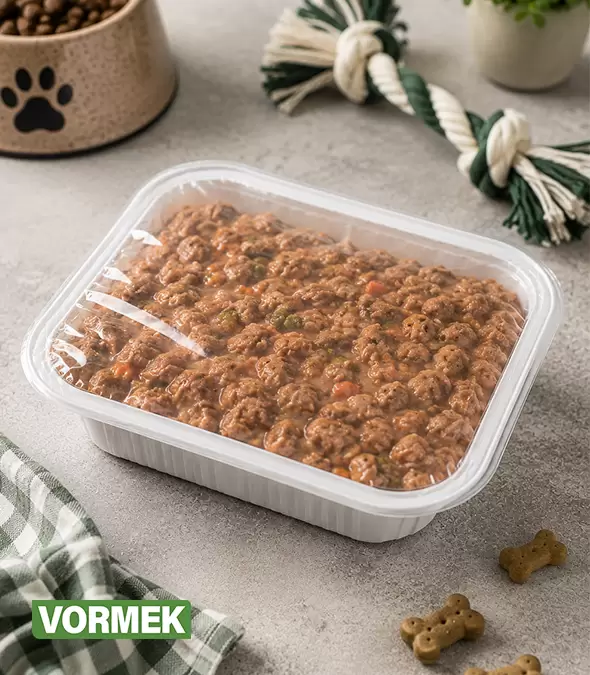
أصبح ختم الصواني ذا أهمية متزايدة لمنتجات أغذية الحيوانات الأليفة المتميزة، خاصة الأطعمة الرطبة وشبه الرطبة المقدمة بتنسيق يشبه الأغذية البشرية. توضح حالة Naturaw، المتخصصة في أغذية الكلاب الطبيعية، قيمة تقنية ختم الصواني الحديثة.
استبدلت Naturaw التعبئة اليدوية – التي استخدمت أغطية صلبة لا يمكنها تحقيق ختم محكم باستمرار – بنظام ختم صواني آلي. يحقق جهاز GTOs MAX الآن ما يصل إلى 60 عبوة في الدقيقة، مع تقنية E-seal التي توفر ختماً عالي الدقة وموفراً للطاقة وزيادة هائلة في قوة الختم لموثوقية ختم ممتازة.
الاعتبارات الرئيسية لختم صواني أغذية الحيوانات الأليفة:
- جودة الختم المحكم. يجب أن يكون الختم موثوقاً لحماية المنتجات الطازجة من دخول الأكسجين وفقدان الرطوبة مع الحفاظ على سلامة العبوة طوال التوزيع. يجب أن توفر آلات ختم الصواني المستخدمة لتطبيقات أغذية الحيوانات الأليفة أداء ختم ثابت عبر فترات الإنتاج.
- التوافق مع العبوة الصديقة للبيئة. مع تحرك العلامات التجارية لأغذية الحيوانات الأليفة نحو التغليف المستدام، يجب أن تكون المعدات قادرة على معالجة مواد الصواني القابلة للتحلل وإعادة التدوير دون المساس بجودة الختم. يتطلب الانتقال إلى المواد المستدامة تقييماً دقيقاً لمعايير الختم وتصميم الأدوات.
- التحقق في مطبخ الاختبار. يؤكد الاختبار المسبق للشراء للصواني ومواد التغليف على معدات الإنتاج التوافق ويضمن التنفيذ الناجح. استخدمت Naturaw مطبخ الاختبار التابع لـ Proseal لتأكيد التوافق قبل الالتزام بالشراء. خطوة التحقق هذه ضرورية للمعالجين الذين يفكرون في تنسيقات مواد جديدة.
- التحقق من سلامة الختم. تضمن فحوصات الجودة المدمجة في الخط أن الأختام سليمة وأن العبوات تلبي مواصفات الجودة.
التشكيل الحراري والتغليف الجلدي بالتفريغ
تُستخدم معدات التشكيل الحراري على نطاق واسع لتغليف أغذية الحيوانات الأليفة عبر تنسيقات متعددة.
تشكيل وختم صواني التشكيل الحراري. بالنسبة لمنتجات أغذية الحيوانات الأليفة المتميزة، يمكن لأنظمة التشكيل الحراري إنشاء تجاويف صواني مخصصة وختمها في ظل ظروف غلاف جوي محكوم. يتضمن نهج التغليف الجلدي الموصوف في براءة الاختراع الأمريكية 2009/0047394 وضع مكونات أغذية الحيوانات الأليفة في صينية بترتيب محدد للجاذبية البصرية، وتطبيق فيلم احتجازي بالتفريغ، وتغطية المنتج. تمنع هذه الطريقة حركة مكونات الطعام أثناء التوزيع، وتوفر عرضاً جذاباً بصرياً، وتمكن من ترتيب المنتج المتسق عبر فترات الإنتاج التجاري، وتقلل من النتانة التأكسدية من خلال إخلاء الأكسجين.
التوافق مع صواني PET. يمكن لتغليف أغذية الحيوانات الأليفة باستخدام صواني PET الشفافة أن يكشف المنتج بصرياً مع الحفاظ على السلامة خلال عملية الختم. توفر صواني PET الوضوح والصلابة، مما يجعلها مناسبة لعروض المنتجات المتميزة.
تكامل التشكيل-التعبئة-الختم. يمكن لأنظمة التشكيل الحراري دمج التشكيل والتعبئة والختم والقطع في خط آلي واحد، مما يقلل المناولة ويحسن الكفاءة.
خيارات التحكم في الغلاف الجوي. يمكن تكوين معدات التشكيل الحراري لتطبيقات MAP أو التفريغ أو التغليف الجلدي، مما يوفر مرونة لتنسيقات المنتجات المختلفة.
معدات التغليف باللف والتعبئة في الأكياس
لأغذية الحيوانات الأليفة الجافة، تعتبر معدات التغليف باللف والتعبئة في الأكياس هي تقنيات التغليف الأساسية.
التشكيل-التعبئة-الختم العمودي (VFFS). تُستخدم أنظمة VFFS على نطاق واسع لتغليف الحبيبات الجافة، وتشكيل الأكياس من لفافة وختمها في عملية مستمرة. يجب أن تتعامل هذه الأنظمة مع المنتج الكاشط دون المساس بجودة الختم.
تعبئة الأكياس مسبقة التشكيل. للتطبيقات التي تتطلب طباعة عالية الجودة أو أنماط أكياس محددة، يتم استخدام معدات تعبئة الأكياس مسبقة التشكيل. تملأ هذه الأنظمة الأكياس مسبقة التشكيل وتغلقها، غالباً مع شطف الغاز لحماية إضافية.
أنظمة الكيس داخل الصندوق. يتم تعبئة بعض أغذية الحيوانات الأليفة الجافة المتميزة في تنسيقات كيس داخل صندوق، مما يوفر حماية معززة وعرضاً متميزاً.
معايير الختم لأغذية الحيوانات الأليفة. يجب أن تكون أنظمة الختم المستخدمة لأغذية الحيوانات الأليفة قوية بما يكفي للتعامل مع البقايا الكاشطة وأحمال المنتج الثقيلة دون المساس بجودة الختم.
عوامل اختيار المعدات
يجب أن يأخذ اختيار معدات تغليف أغذية الحيوانات الأليفة في الاعتبار:
- خصائص المنتج. الحبيبات الجافة، والوجبات الخفيفة شبه الرطبة، والأطعمة الرطبة لكل منها متطلبات تغليف مختلفة تؤثر على اختيار المعدات. تؤثر الخصائص الفيزيائية للمنتج على أنظمة التغذية والتعبئة والختم.
- متطلبات الحجم. تستفيد العمليات عالية الحجم من الخطوط الآلية بالكامل مع التعبئة والختم والتغليف الثانوي المتكاملين. قد تكون الأنظمة شبه الآلية كافية للعمليات الأصغر أو المنتجات المتخصصة.
- التوافق مع المواد. يتطلب التحرك نحو الهياكل القابلة لإعادة التدوير معدات متوافقة مع الأفلام القائمة على PE والمواد المستدامة الأخرى. يجب التحقق من صحة المعدات لتنسيقات المواد الجديدة.
- التصميم الصحي. يجب أن تفي معدات تغليف أغذية الحيوانات الأليفة بمعايير سلامة الأغذية مع بناء من الفولاذ المقاوم للصدأ، وقابلية الغسيل، وقابلية التنظيف. تنطبق مبادئ التصميم الصحي بالتساوي على تغليف أغذية الحيوانات الأليفة والبشرية.
- متطلبات التبديل. تستفيد العمليات التي تحتوي على وحدات SKU متعددة من المعدات ذات ميزات التغيير السريع وإدارة الوصفات.
- قيود المساحة الأرضية. يجب أن تكون مساحة المعدات متوافقة مع تخطيطات المنشأة الحالية.
- الاستثمار الرأسمالي وعائد الاستثمار. يجب أن يحقق الاستثمار في المعدات عوائد مقبولة من خلال تحسين الكفاءة، أو تقليل العمالة، أو تعزيز الجودة.
ضمان جودة الختم وسلامته
لماذا تعتبر جودة الختم مهمة لأغذية الحيوانات الأليفة
سلامة الختم هي سمة الجودة الأكثر أهمية لأي عبوة أغذية حيوانات أليفة. يؤدي اختراق الختم إلى تعريض جميع وظائف التغليف الأخرى للخطر:
- هروب الرائحة. يسمح الختم المعرض للخطر بتسرب المركبات المتطايرة، مما يجعل رائحة المنتج ملحوظة في بيئات البيع بالتجزئة. يمكن أن يكون هذا منفراً للمستهلكين ويقلل من نية الشراء.
- هجرة الدهون. توفر الفجوات أو نقاط الضعف في الختم مسارات لهجرة الدهون عبر التغليف، مما يسبب البقع. تشير بقع الدهون على الجزء الخارجي من العبوة إلى مشاكل في الجودة للمستهلكين.
- دخول الأكسجين. يؤدي دخول الأكسجين من خلال عيوب الختم إلى تسريع النتانة التأكسدية وانخفاض الجودة. حتى عيوب الختم الصغيرة يمكن أن تسمح بدخول كافٍ من الأكسجين للتسبب في فقدان جودة ملحوظ.
- انتقال الرطوبة. يسمح فشل الختم باكتساب الرطوبة (للمنتجات الجافة) أو فقدان الرطوبة (للمنتجات الرطبة)، مما يعرض جودة المنتج للخطر. الحبيبات الجافة التي تمتص الرطوبة تصبح طرية وغير مستساغة.
- خطر التلوث. يمكن لأي عيب في الختم أن يسمح بالتلوث الميكروبي، خاصة في المنتجات الرطبة أو شبه الرطبة.
- سلامة العبوة. تقلل الأختام المعرضة للخطر من السلامة الميكانيكية للعبوة، مما يزيد من خطر التلف أثناء التوزيع.
العوامل المؤثرة على جودة الختم
يجب أن تدير أنظمة الختم الحديثة معايير متعددة لتحقيق أختام متسقة وموثوقة:
- التحكم في درجة الحرارة. يجب التحكم في درجة حرارة الختم بدقة والحفاظ عليها لضمان قوة ختم متسقة دون تدهور الفيلم. يمكن أن تتسبب تغيرات درجة الحرارة عبر شريط الختم في جودة ختم غير متسقة.
- ضغط الختم. الضغط الكافي ضروري للتلامس الوثيق بين طبقات الختم. يؤدي الضغط غير الكافي إلى أختام ضعيفة، بينما يمكن للضغط المفرط أن يتلف الأفلام.
- زمن المكوث. يؤثر الوقت الذي يتم فيه الحفاظ على الختم تحت الحرارة والضغط على قوة الختم. تعمل أوقات المكوث الأطول عموماً على تحسين قوة الختم ولكنها تقلل من سرعة الإنتاج.
- توافق الفيلم. تتطلب تركيبات الفيلم المختلفة ظروف ختم مختلفة، مما يستلزم معايير ختم قابلة للتعديل.
- قوة الختم. يمكن للأنظمة الحديثة تقديم زيادات هائلة في قوة الختم مقارنة بالأنظمة التقليدية، مما يحسن موثوقية الختم.
- التلوث. يمكن أن تؤثر بقايا المنتج على مناطق الختم على جودة الختم، خاصة مع المنتجات الدهنية أو المغبرة.
- حالة شريط الختم. تنتج أشرطة الختم البالية أو التالفة أختاماً غير متسقة.
التحقق من الجودة المدمج في الخط
تساعد أنظمة التحقق المدمجة في الخط في ضمان جودة الختم:
- اختبار سلامة الختم. يتحقق اختبار التفريغ أو اختبار الضغط من أن الأختام سليمة.
- مراقبة الغلاف الجوي لتطبيقات MAP. تتحقق أجهزة الاستشعار من تحقيق تركيبة الغلاف الجوي المطلوبة.
- أنظمة الفحص البصري. يكتشف الفحص القائم على الكاميرا عيوب الختم وتلف العبوة.
- التحقق من الوزن. تضمن موازين التدقيق أن أوزان تعبئة المنتج ضمن المواصفات.
- كشف المعادن. يكتشف تلوث المعادن الحديدية وغير الحديدية.
التحقق والتأهيل
- بروتوكولات التحقق من الختم. يجب على المعالجين وضع بروتوكولات تحقق تحدد معايير قوة الختم وسلامته المقبولة.
- اختبار قوة الختم. يقيس الاختبار المعملي قوة الختم ويحدد معايير الختم المثلى.
- اختبار التسرب. يتحقق اختبار التسرب من أن الأختام محكمة.
- الاختبار البيئي. يتم اختبار العبوات في ظل ظروف توزيع محاكاة للتحقق من أداء الختم.
الجداول الفنية
الجدول 1: مواد تغليف أغذية الحيوانات الأليفة – خصائص الحاجز والتطبيقات
| نوع المادة | خصائص الحاجز الرئيسية | التطبيقات الأساسية | اعتبارات الاستدامة |
|---|---|---|---|
| أفلام قائمة على EVOH | حاجز أكسجين ورائحة ممتاز | أغذية الحيوانات الأليفة الجافة التي تتطلب التحكم في الأكسدة | يمكن طلاؤها بالمعدن لأداء محسن؛ قابلية محدودة لإعادة التصبن |
| BOPET/BOPP المعدني | حاجز الأكسجين والرطوبة والضوء | أغذية الحيوانات الأليفة الجافة والرطبة التي تتطلب عمراً افتراضياً ممتداً | استخدام أقل للألومنيوم مقارنة بصفائح ورق الألومنيوم؛ هياكل قابلة لإعادة التدوير متاحة |
| أفلام PE القابلة لإعادة التدوير | حاجز متغير (مصمم حسب الهيكل) | مجموعة واسعة من تطبيقات أغذية الحيوانات الأليفة الجافة | متوافقة مع APR؛ متوافقة مع تيارات إعادة تدوير PE |
| ورق مطلي خالٍ من PFAS | الدهون والرائحة والرطوبة والأكسجين | وجبات الحيوانات الأليفة الخفيفة؛ تغليف مستدام متميز | قابل لإعادة التصبن؛ يعالج المخاوف التنظيمية بشأن المركبات المفلورة |
| طلاءات حيوية (PLANTIC) | حاجز غاز؛ قابل للتحلل الحيوي | تطبيقات التغليف المستدام | قابل للتحلل صناعياً ومنزلياً؛ قابل لإعادة التصبن |
الجدول 2: معدات تغليف أغذية الحيوانات الأليفة – اعتبارات الاختيار
| التقنية | أفضل التطبيقات | المزايا الرئيسية | الاعتبارات |
|---|---|---|---|
| ختم الصواني | الأطعمة الرطبة وشبه الرطبة؛ العروض المتميزة | جودة ختم محكم؛ إنتاجية عالية (حتى 60+ عبوة/دقيقة) | يتطلب مناولة الصواني؛ قدرة تغيير الأداة مهمة |
| التشكيل الحراري | تنسيقات متعددة؛ إنتاج عالي الحجم | تشكيل صواني مخصص؛ خط تغليف متكامل | استثمار رأسمالي أعلى؛ توافق المواد |
| التغليف الجلدي بالتفريغ | عرض منتج متميز | عرض ثلاثي الأبعاد؛ تثبيت المنتج؛ أكسدة منخفضة | محدود بأنواع منتجات محددة؛ متطلبات التفريغ |
| التغليف باللف | الحبيبات الجافة والوجبات الخفيفة؛ أكياس التجزئة | تشغيل عالي السرعة؛ كفاءة المواد | رؤية محدودة للمنتج؛ أداء الحاجز يعتمد على اختيار الفيلم |
الأسئلة الشائعة
1. لماذا يعتبر التحكم في الرائحة مهماً في تغليف أغذية الحيوانات الأليفة، وكيف يتم تحقيقه؟
التحكم في الرائحة ضروري لقبول البيع بالتجزئة ورضا المستهلك. تنبعث من مكونات الدهون والبروتين في أغذية الحيوانات الأليفة مركبات متطايرة يمكن أن ينظر إليها على أنها غير سارة في بيئات البيع بالتجزئة ومن قبل أصحاب الحيوانات الأليفة في المنزل. يتم تحقيق التحكم في الرائحة من خلال طبقات الحاجز – عادةً EVOH أو الأفلام المعدنية – التي تمنع المركبات المتطايرة من الهروب من العبوة. حتى مع الأكياس محكمة الغلق، يمكن أن تتطور الرائحة خارج العبوة في غضون ساعة واحدة إذا كان التغليف يفتقر إلى خصائص حاجز كافية. يخلق هيكل الفيلم المناسب حاجزاً فعالاً ضد المركبات العضوية المتطايرة، مما يضمن احتواء الروائح داخل العبوة طوال العمر الافتراضي للمنتج.
2. ما الذي يجعل تغليف أغذية الحيوانات الأليفة مختلفاً عن تغليف الأغذية البشرية؟
يجب أن يعالج تغليف أغذية الحيوانات الأليفة عدة تحديات أقل شيوعاً في تطبيقات الأغذية البشرية: محتوى دهون مرتفع يتطلب مقاومة للدهون (يمكن أن يحتوي طعام الكلاب على ما يصل إلى 20 بالمائة من الدهون)؛ روائح قوية تحتاج إلى احتواء؛ حبيبات كاشطة تسبب إجهاداً ميكانيكياً على الأفلام؛ وأكياس كبيرة الحجم (تصل إلى 25 كجم) تتطلب قوة استثنائية ومتانة في السقوط. بالإضافة إلى ذلك، يجب أن يلبي تغليف أغذية الحيوانات الأليفة متطلبات الاستدامة والتنظيم المتطورة مع الحفاظ على الأداء في ظل ظروف توزيع صعبة.
3. ما هي متطلبات الحاجز الرئيسية لتغليف أغذية الحيوانات الأليفة الجافة؟
يجب أن يوفر تغليف أغذية الحيوانات الأليفة الجافة: حاجزاً للأكسجين لمنع النتانة التأكسدية؛ منع هجرة الدهون/الدهون لتجنب البقع؛ حاجزاً للرطوبة لمنع انخفاض الجودة؛ احتواء الرائحة؛ وقوة ميكانيكية كافية للمنتجات الثقيلة والكاشطة. يتم تلبية هذه المتطلبات عادة من خلال هياكل متعددة الطبقات تجمع بين مواد مختلفة – على سبيل المثال، طبقة حاجز للرائحة EVOH مع HDPE لمقاومة الدهون و LLDPE لمقاومة الثقب.
4. كيف تدعم معدات التغليف جودة الختم لأغذية الحيوانات الأليفة؟
توفر معدات تغليف أغذية الحيوانات الأليفة الحديثة تحكماً دقيقاً في درجة حرارة الختم والضغط والوقت لضمان أختام موثوقة. تقدم الأنظمة المتقدمة قوة ختم متزايدة مقارنة بالتصاميم التقليدية، مما يحسن موثوقية الختم. بالنسبة للمعالجين الذين ينتقلون إلى مواد تغليف مستدامة، يقدم مصنعو المعدات خدمات اختبار وتحقق لتأكيد التوافق مع هياكل الفيلم الجديدة قبل بدء الإنتاج. يضمن التصميم الصحي مع بناء الفولاذ المقاوم للصدأ وقابلية الغسيل سلامة الأغذية طوال عملية التغليف. تساعد أنظمة التحقق من الجودة المدمجة في الخط في الحفاظ على جودة ختم متسقة.
5. ما هي اتجاهات الاستدامة في تغليف أغذية الحيوانات الأليفة؟
تتحرك صناعة تغليف أغذية الحيوانات الأليفة نحو حلول خالية من PFAS، وقابلة لإعادة التدوير، وقائمة على الورق. توفر بدائل تغليف الورق الخالية من PFAS أداء حاجز للدهون والرائحة والرطوبة والأكسجين دون مركبات فلورية. يتم تطوير هياكل البولي إيثيلين الكاملة المتوافقة مع إرشادات إعادة تدوير APR لأكياس أغذية الحيوانات الأليفة كبيرة الحجم. تمكن الطلاءات الحيوية من مواد خام متجددة تغليفاً ورقياً قابلاً لإعادة التصبن بخصائص حاجز غاز وقابلية للتحلل الحيوي. تستجيب هذه التطورات للضغط التنظيمي على المركبات المفلورة، وتفضيل المستهلك للتغليف القائم على الورق، والالتزامات الأوسع للاستدامة.
6. كيف تؤثر هجرة الدهون على تغليف أغذية الحيوانات الأليفة، وكيف يتم منعها؟
تحدث هجرة الدهون عندما تهاجر الدهون الحيوانية المطبقة على الحبيبات كمحسنات استساغة عبر مواد التغليف، مما يتسبب في بقع دهنية على الجزء الخارجي من العبوة. تقلل هذه البقع من جاذبية الرف وتشير إلى مشاكل في الجودة للمستهلكين. يتطلب المنع مواد تغليف ذات خصائص مقاومة للدهون، مثل طبقات HDPE في الهياكل متعددة الطبقات أو الطلاءات المقاومة للدهون. يجب أن يأخذ اختيار هيكل التغليف في الاعتبار كلاً من محتوى الدهون في المنتج وظروف التخزين المتوقعة.
7. ما هو الدور الذي تلعبه الرطوبة في جودة أغذية الحيوانات الأليفة، وكيف يتحكم فيها التغليف؟
تؤثر الرطوبة بشكل كبير على جودة أغذية الحيوانات الأليفة. يجب حماية الحبيبات الجافة من اكتساب الرطوبة، مما يمكن أن يسبب التليين، ونمو العفن، وأكسدة الدهون المتسارعة. تتطلب الأطعمة شبه الرطبة والرطبة تغليفاً يمنع فقدان الرطوبة، مما قد يؤدي إلى التصلب وتدهور القوام. تختلف متطلبات حاجز الرطوبة بشكل كبير حسب نوع المنتج، حيث تتطلب المنتجات الجافة الحماية من الرطوبة المحيطة وتتطلب المنتجات الرطبة الاحتفاظ برطوبتها الجوهرية. تتحكم طبقات الحاجز في هيكل التغليف في انتقال الرطوبة.
8. ما هي اعتبارات اختيار معدات تغليف أغذية الحيوانات الأليفة؟
يجب أن يأخذ اختيار معدات تغليف أغذية الحيوانات الأليفة في الاعتبار: خصائص المنتج (حبيبات جافة، شبه رطبة، رطبة)؛ متطلبات حجم الإنتاج؛ توافق المواد (خاصة للهياكل المستدامة)؛ التصميم الصحي ومتطلبات سلامة الأغذية؛ قدرات التبديل لوحدات SKU المتعددة؛ قيود المساحة الأرضية؛ الاستثمار الرأسمالي وعائد الاستثمار؛ وتوفر دعم التحقق والاختبار من الشركة المصنعة للمعدات. يضمن التقييم الشامل لهذه العوامل اختيار المعدات التي تلبي المتطلبات التشغيلية مع دعم أهداف الجودة والاستدامة.
9. كيف يساهم التغليف في سلامة أغذية الحيوانات الأليفة؟
يساهم التغليف في سلامة أغذية الحيوانات الأليفة من خلال توفير حاجز ضد التلوث، والحماية من التلف الفيزيائي الذي يمكن أن يدخل الكائنات المسببة للتلف، والحفاظ على البيئة الوقائية للمنتج. سلامة الختم أمر بالغ الأهمية – أي عيب في الختم يمكن أن يسمح بالتلوث الميكروبي، خاصة في المنتجات الرطبة أو شبه الرطبة. يضمن تصميم المعدات الصحي مع بناء الفولاذ المقاوم للصدأ، وقابلية الغسيل، وقابلية التنظيف سلامة الأغذية طوال عملية التغليف.
10. ما هي الاتجاهات المستقبلية التي ستشكل تغليف أغذية الحيوانات الأليفة؟
تشمل الاتجاهات المستقبلية في تغليف أغذية الحيوانات الأليفة: استمرار نمو الحلول المستدامة والقابلة لإعادة التدوير؛ الضغط التنظيمي على المركبات المفلورة الذي يقود بدائل خالية من PFAS؛ التغليف الذكي مع مؤشرات النضارة؛ تصاميم تغليف محسنة للتجارة الإلكترونية للشحن المباشر إلى المستهلك؛ وأتمتة معززة مع تكامل البيانات لتحسين كفاءة الخط. سيكون المعالجون الذين يظلون على اطلاع بهذه الاتجاهات ويستثمرون في معدات مرنة وقابلة للترقية في وضع جيد للنجاح المستقبلي.
الاستنتاج
يمثل تغليف أغذية الحيوانات الأليفة مجموعة معقدة من التحديات التقنية التي تتطلب اختياراً دقيقاً للمواد، وهندسة دقيقة، وأداءً موثوقاً للمعدات. يجب معالجة التحكم في الرائحة، ومنع هجرة الدهون، وخصائص حاجز الأكسجين والرطوبة، وسلامة الختم جميعها في وقت واحد لضمان جودة المنتج، وقبول البيع بالتجزئة، ورضا المستهلك.
يتطور السوق بسرعة تحت ضغوط متعددة: متطلبات الاستدامة التي تقود الهياكل القابلة لإعادة التدوير والخالية من PFAS، والترفيع الذي يتطلب تغليفاً يدعم تمايز العلامة التجارية، والتطورات التنظيمية التي تؤثر على اختيارات المواد. يجب على المعالجين تقييم التغليف ليس فقط لأداء المنتج ولكن أيضاً لملف الاستدامة، والامتثال التنظيمي، والمساهمة في إدراك العلامة التجارية.
تقدم تكنولوجيا التغليف الحديثة حلولاً لهذه التحديات. توفر أفلام الحاجز المتقدمة مع EVOH، والطبقات المعدنية، والطلاءات الخالية من PFAS الأداء الوظيفي اللازم لتطبيقات أغذية الحيوانات الأليفة الصعبة. تقدم معدات ختم الصواني والتشكيل الحراري جودة الختم وكفاءة الإنتاج المطلوبة للمعالجة عالية الحجم. تقدم الهياكل المستدامة الناشئة وعداً بتقليل التأثير البيئي دون المساس بالأداء.
يتطلب تغليف أغذية الحيوانات الأليفة الناجح نهجاً متكاملاً يأخذ في الاعتبار خصائص المنتج، وعلم المواد، وقدرات المعدات، ومتطلبات السوق. يمكن للمعالجين الذين يتبنون هذه النظرة الشاملة تطوير حلول تغليف تحمي جودة المنتج، وتدعم وضع العلامة التجارية، وتلبي توقعات الاستدامة والتنظيم المتطورة. يؤتي الاستثمار في فهم وتنفيذ حلول التغليف الفعالة ثماره من خلال تقليل النفايات، وتعزيز سمعة العلامة التجارية، وتحسين رضا العملاء.
هل أنت مستعد لمناقشة متطلبات تغليف أغذية الحيوانات الأليفة الخاصة بك؟ تقدم Vormek Packaging Solutions خبرة هندسية وآلات تغليف مصممة خصيصاً لصناعة أغذية الحيوانات الأليفة الصعبة. اتصل بفريقنا الهندسي لمناقشة تطبيقك واستكشاف كيف يمكننا مساعدتك في تحقيق التميز في التغليف.